In the high-stakes world of facility management and logistics, the word "upgrade" is often synonymous with "expensive," "disruptive," and "complicated." It usually implies weeks of downtime, contractor permits, trenching for cables, and a hefty capital expenditure request that gets stuck in corporate approval for months.
When it comes to waste management, this fear creates a "paralysis by analysis." Many operators cling to inefficient, overflowing open-top dumpsters simply because they fear the transition to compaction will be a logistical nightmare involving construction crews and electricians.
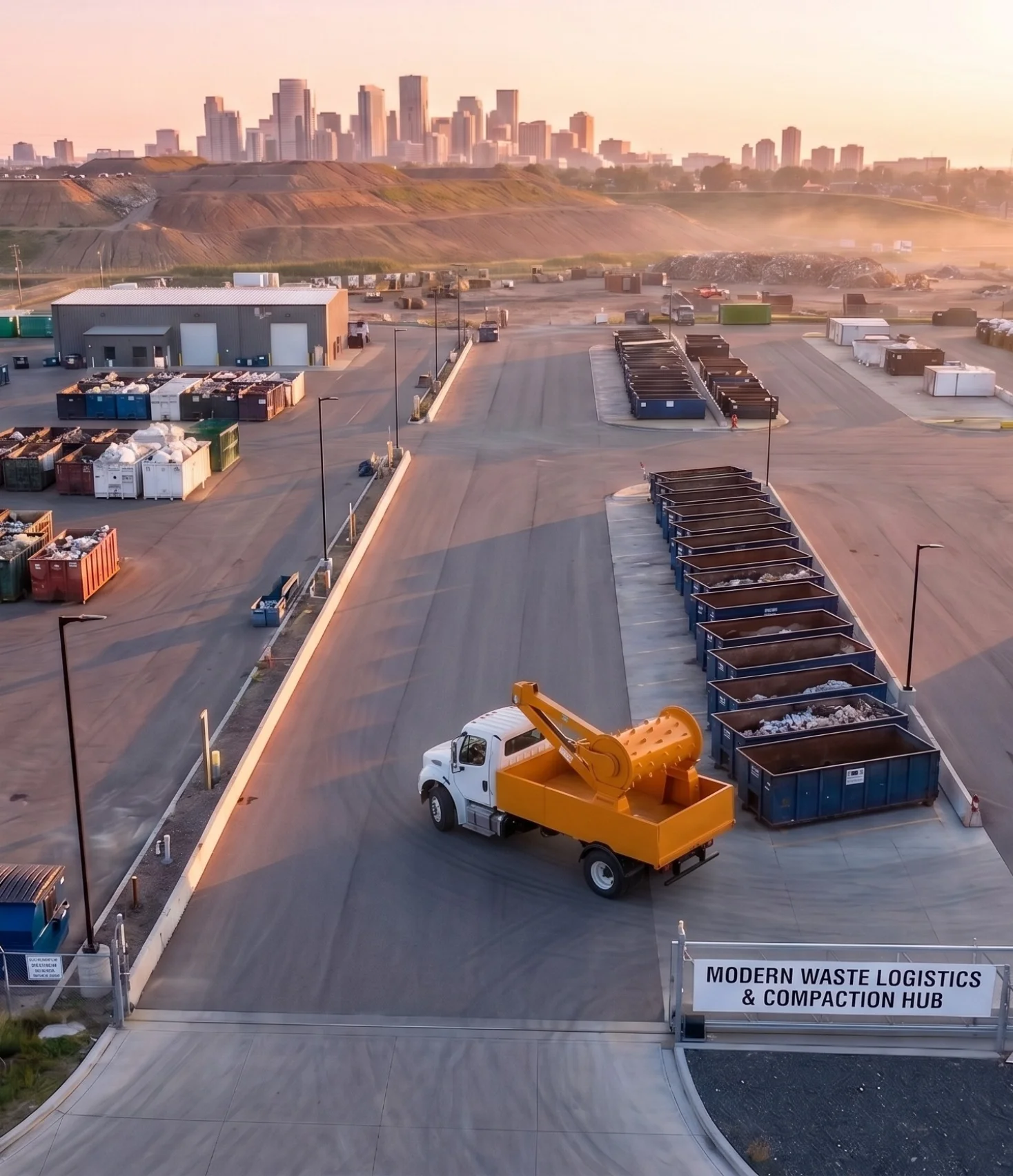
The reality? Adding compaction to your waste operation takes significantly less effort than you think. The industry has evolved. By investing in your own Mobile Compaction Truck (like our industry-leading Packmat units), the traditional physical and operational barriers to entry have been virtually eliminated. This article demystifies the process, proving that modernizing your waste strategy is a powerful, plug-and-play solution that you control.
Myth vs. Reality: The Infrastructure Barrier
To understand why owning a mobile compaction truck is revolutionary, we must look at what it replaces. The traditional image of a waste compactor is a massive, static machine bolted to the concrete. While effective, these stationary units come with a laundry list of prerequisites that scare off many businesses.
Here is the breakdown of the "Old Way" versus the freedom of owning your own Packmat:
1. Power Supply
- Stationary: Requires a dedicated 3-phase, 208V/460V high-voltage line. Often involves expensive trenching and conduit installation.
- Mobile: Zero facility power required. The truck brings its own robust hydraulic power system. If your building's power goes out, you can still compact.
2. Infrastructure
- Stationary: Demands a reinforced concrete pad, guide rails, safety cages, and permanently sacrifices 2-3 parking spaces.
- Mobile: Zero construction. If you have room for an open-top dumpster, you have room for a Packmat. It crushes the waste and drives away.
3. Financial Strategy
- Stationary: Capital is permanently tied to a single, immobilized asset per site. You must buy a separate unit for every dumpster location.
- Mobile: Maximum versatility. One capital asset can service dozens of bins across multiple sites, offering massive, scalable ROI.
4. Flexibility
- Stationary: Permanently fixed. Moving it requires heavy machinery and a flatbed.
- Mobile: Fully mobile. Compact where you want, when you want, across your entire operation or municipality.
The Operational Shift: Seamless and Safer
Perhaps the biggest fear operations managers have is disruption. "Will my staff need training?" "Will this change our workflow?" "Is it safe?"
Integrating your own mobile compaction truck requires almost no change to your facility's daily workflow, but it significantly improves your overall risk profile.
The Liability Trap of Stationary Units
With a stationary compactor, your janitorial or warehouse staff must be trained to operate heavy machinery. They are responsible for managing safety keys, locking out the machine, and occasionally clearing jams. This introduces a significant safety risk and liability across a wide number of employees.
The Mobile Advantage
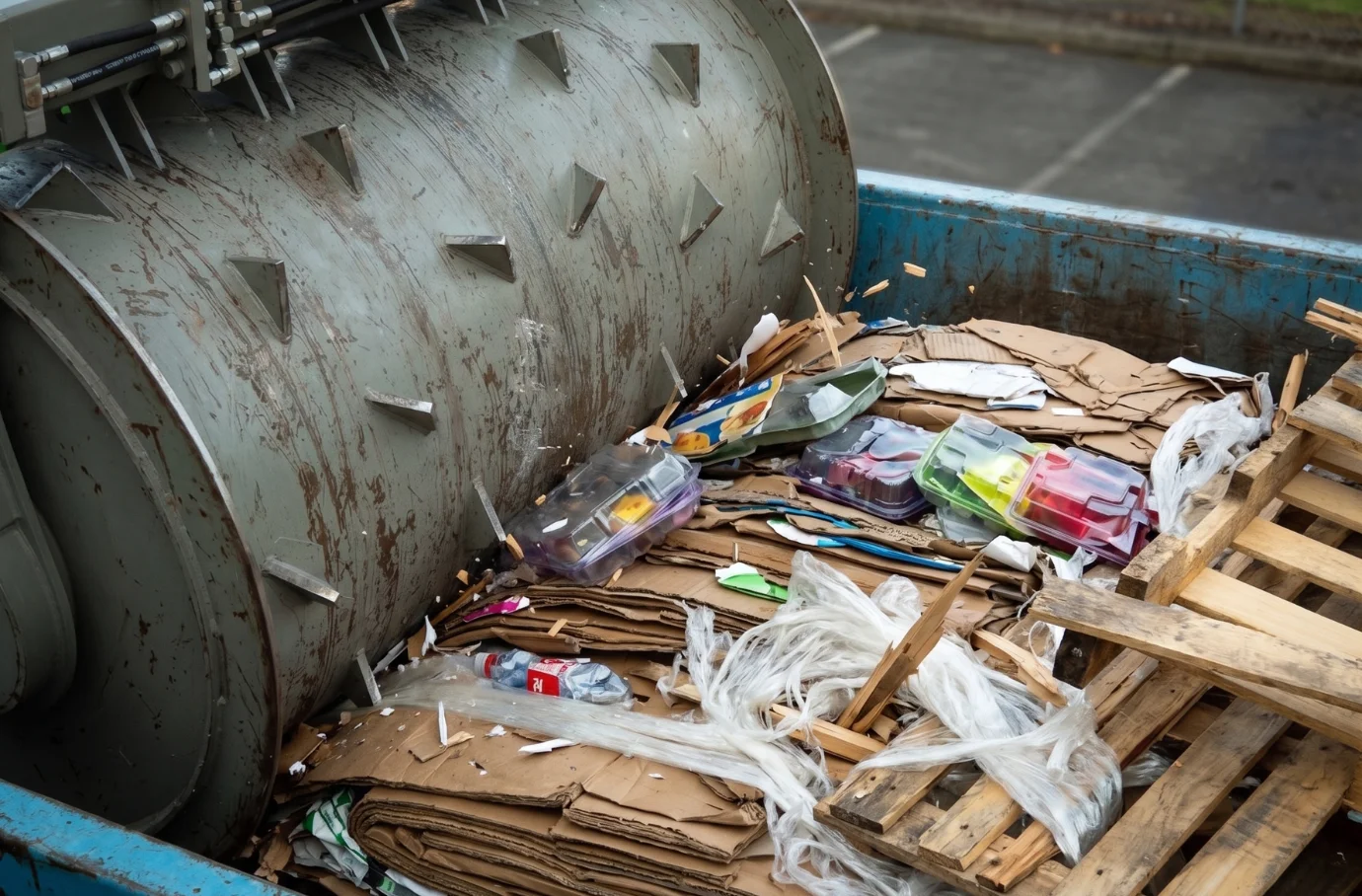
When you run your own Packmat truck, your general staff continues to throw waste into the open dumpsters as usual, no new training required for them. Your dedicated, trained Packmat operator arrives, compacts the waste directly in the bin safely from the cab using the heavy-duty hydraulic boom, and moves on to the next site. You effectively centralize the equipment operation to one specialized driver, vastly reducing facility-level safety liabilities.
The Hidden Requirements: What You Actually Need
So, if you don't need heavy machinery bolted to the ground, concrete pads, or electrical trenching, what do you need to get started with your new Packmat? The list is surprisingly short:
- Standard Access (Vertical & Horizontal): The compaction truck needs to be able to reach your dumpsters. If a standard garbage truck can get to it, your Packmat can too. The only specific requirement is roughly 20-25 feet of overhead clearance for the boom arm to operate safely.
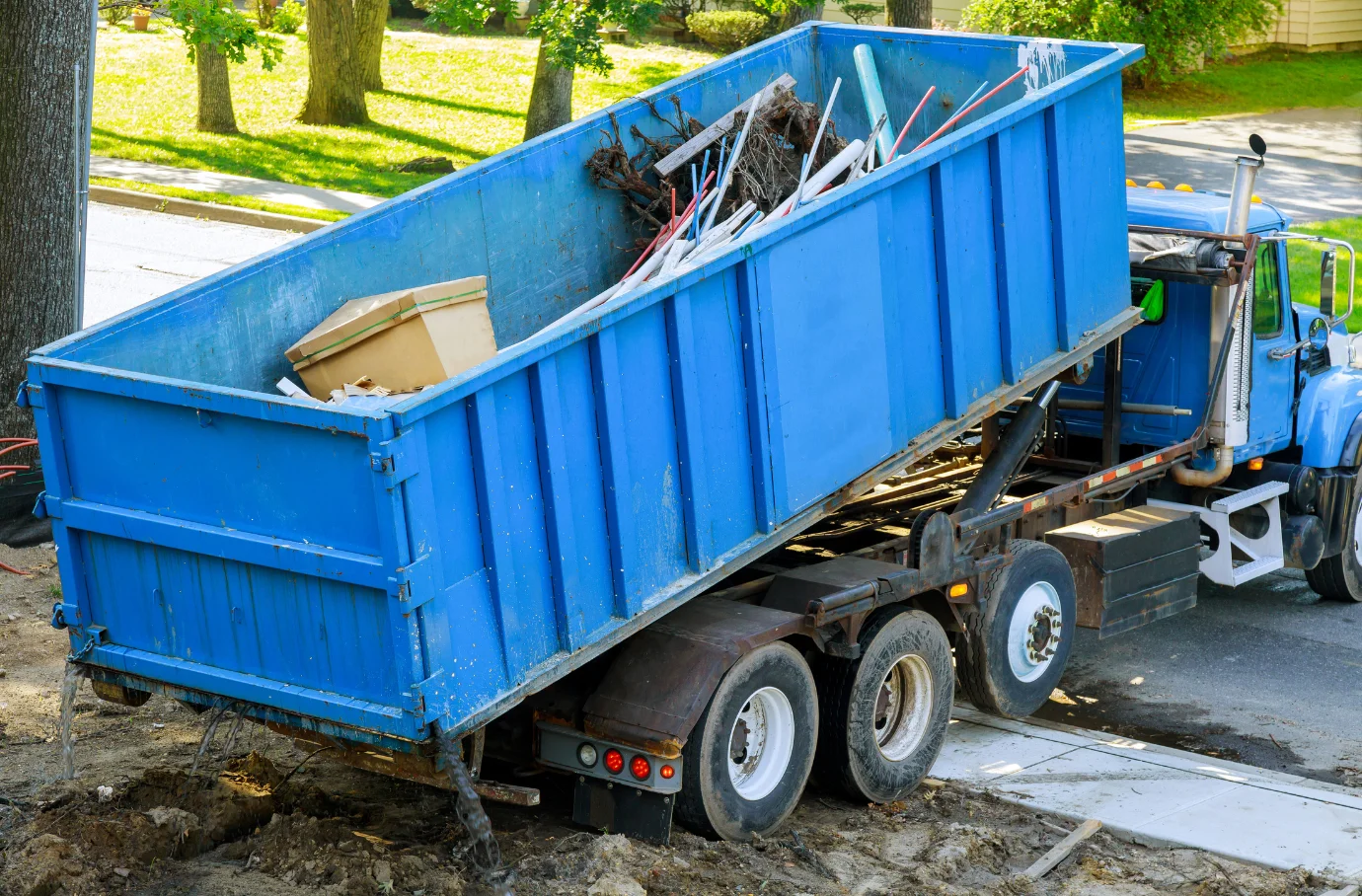
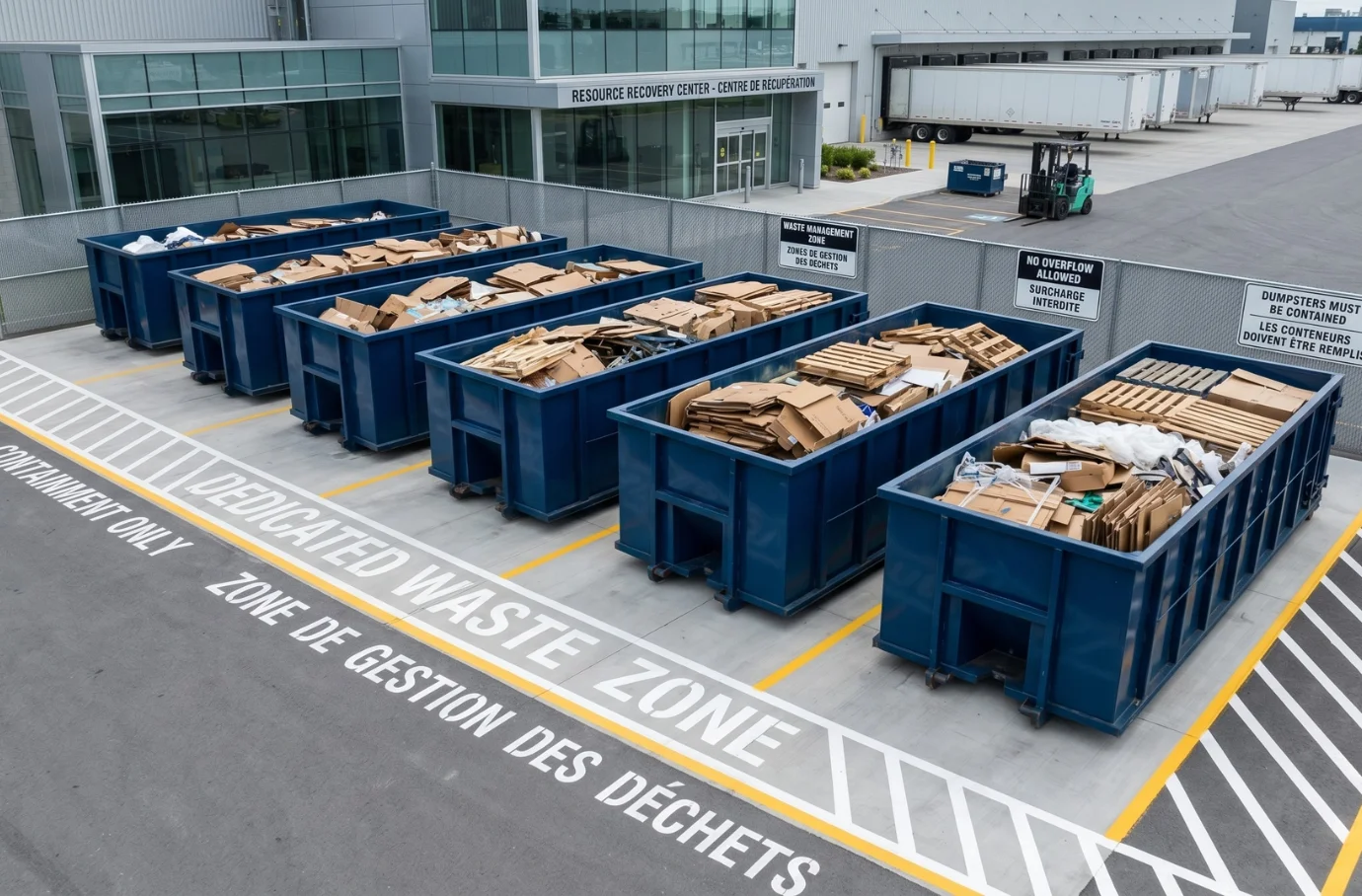
- Standard Open-Top Dumpsters: Mobile compaction is designed to work with the bins you already have. It works brilliantly on standard 20, 30, or 40-yard roll-off dumpsters, effectively crushing general mixed waste, pallets, furniture, and light industrial debris.
- A Revised Waste Hauling Contract: You do not need to fire your hauler; you just call them less often. To realize your savings, switch your hauling contract from a "scheduled frequency" (e.g., picking up every Monday) to an "on-call" schedule.
Calculating the ROI: The Economics of Density
The return on investment when purchasing a mobile compaction truck is realized incredibly fast. By utilizing one machine across multiple dumpsters or facilities, the savings compound with every skipped haul.
The Math of Efficiency: Let’s say one of your sites generates 60 yards of waste a week.
- Scenario A (No Compaction): You pay for two 30-yard pickups per week. You are paying two "haul fees" plus fuel surcharges.
- Scenario B (With Your Packmat): Your operator crushes that waste down by a conservative ratio of 3:1. Now, that same 60 yards of loose trash fits easily into 20 yards of space. You only need one pickup every 1.5 weeks.
The Result: You have effectively eliminated nearly 70% of your truck trips for that single bin. Multiply those savings across your entire fleet of dumpsters. Fewer haul trucks mean drastically lower costs, less diesel burnt (reducing Scope 3 emissions), and less wear and tear on your asphalt.
Conclusion
Adding compaction to your operation is not a construction project; it is an equipment upgrade that puts you in control. It requires no downtime, no site construction, and centralizes your waste management power into one highly efficient vehicle.
If you have dumpsters and a road leading to them, you are ready to deploy a Packmat today. The question isn't "Can we afford to buy a compaction truck?" but rather "Can we afford to keep paying haulers to transport air?"
References
- [1] National Waste & Recycling Association. (2022). "Operational Efficiencies in Commercial Waste Management."
- [2] U.S. Small Business Administration. (2023). "Cost Reduction Strategies for Facilities Management."
- [3] Journal of Environmental Management. (2021). "Life Cycle Assessment of Mobile vs. Stationary Compaction."
- [4] Sustainability Accounting Standards Board (SASB). (2022). "Waste Management Standards and Scope 3 Emissions."
Frequently Asked Questions About Owning a Mobile Compactor
Q: Do I need to buy special bins to use a Packmat truck?
A: Generally, no. Our compaction trucks are designed to work perfectly with standard open-top dumpsters (roll-offs) that you likely already own or rent. Your existing bins can be used without modification, provided they are in good structural condition.
Q: How much weight can a compacted bin hold?
A: A compacted bin can hold 3 to 5 times the amount of waste as a non-compacted one. For example, a 40-yard bin that usually holds 2-3 tons of loose trash could hold 6-8 tons after your truck compacts it. Your operator can monitor this to ensure it stays within legal road limits for your hauler.
Q: Is the compaction process loud?
A: The noise level is comparable to a standard heavy-duty truck engine or a forklift. Since the Packmat process is highly efficient, taking only a few minutes per bin, any disturbance is minimal and brief, vastly preferable to the constant, grinding noise of a stationary compactor running all day.
Easy steps to create a color palette
Lorem ipsum dolor sit amet, consectetur adipiscing elit lobortis arcu enim urna adipiscing praesent velit viverra sit semper lorem eu cursus vel hendrerit elementum morbi curabitur etiam nibh justo, lorem aliquet donec sed sit mi dignissim at ante massa mattis.
- Neque sodales ut etiam sit amet nisl purus non tellus orci ac auctor
- Adipiscing elit ut aliquam purus sit amet viverra suspendisse potent
- Mauris commodo quis imperdiet massa tincidunt nunc pulvinar
- Excepteur sint occaecat cupidatat non proident sunt in culpa qui officia
What is a color palette?
Vitae congue eu consequat ac felis placerat vestibulum lectus mauris ultrices cursus sit amet dictum sit amet justo donec enim diam porttitor lacus luctus accumsan tortor posuere praesent tristique magna sit amet purus gravida quis blandit turpis.
Don’t overspend on growth marketing without good retention rates
At risus viverra adipiscing at in tellus integer feugiat nisl pretium fusce id velit ut tortor sagittis orci a scelerisque purus semper eget at lectus urna duis convallis porta nibh venenatis cras sed felis eget neque laoreet suspendisse interdum consectetur libero id faucibus nisl donec pretium vulputate sapien nec sagittis aliquam nunc lobortis mattis aliquam faucibus purus in.
- Neque sodales ut etiam sit amet nisl purus non tellus orci ac auctor
- Adipiscing elit ut aliquam purus sit amet viverra suspendisse potenti
- Mauris commodo quis imperdiet massa tincidunt nunc pulvinar
- Adipiscing elit ut aliquam purus sit amet viverra suspendisse potenti
What’s the ideal customer retention rate?
Nisi quis eleifend quam adipiscing vitae aliquet bibendum enim facilisis gravida neque euismod in pellentesque massa placerat volutpat lacus laoreet non curabitur gravida odio aenean sed adipiscing diam donec adipiscing tristique risus amet est placerat in egestas erat.
“Lorem ipsum dolor sit amet consectetur adipiscing elit, sed do eiusmod tempor incididunt ut labore et dolore magna aliqua enim ad minim veniam.”
Next steps to increase your customer retention
Eget lorem dolor sed viverra ipsum nunc aliquet bibendum felis donec et odio pellentesque diam volutpat commodo sed egestas aliquam sem fringilla ut morbi tincidunt augue interdum velit euismod eu tincidunt tortor aliquam nulla facilisi aenean sed adipiscing diam donec adipiscing ut lectus arcu bibendum at varius vel pharetra nibh venenatis cras sed felis eget.

Antoine Galdès
For over 10 years, I’ve worked in marketing with a strong focus on cleantech innovation and the evolving challenges shaping the waste and compaction industry. I’m passionate about staying ahead of industry trends, continuously learning, and sharing practical insights that help businesses and municipalities improve their operations more efficiently and sustainably.
.webp)
