Change often brings uncertainty. In the waste management sector, where service reliability is paramount, long-standing relationships with haulers are deeply valued. Facility managers know their drivers by name, and they know that when the bin is full, the truck appears. Consequently, when facility managers are introduced to the concept of third-party mobile compaction, the first question is almost always defensive: "Will compaction replace my hauler?"
The answer is an emphatic no.
This fear stems from a common misconception that views waste management as a zero-sum game, if one vendor wins, the other must lose. In reality, mobile compaction and waste hauling are complementary services. They are two halves of the same efficient whole, working in tandem to optimize a supply chain that has been broken for decades.
The Fundamental Difference: Logistics vs. Density
To understand why these services do not compete, we must distinguish their core business models. It essentially comes down to "Moving" vs. "Crushing."
- The Hauler (Logistics): Your hauler’s core competency is transportation. Their business model is built on moving material from Point A (your business) to Point B (the landfill or recycling center). They sell truck time, fuel, and driver hours. Their enemies are traffic, distance, and downtime.
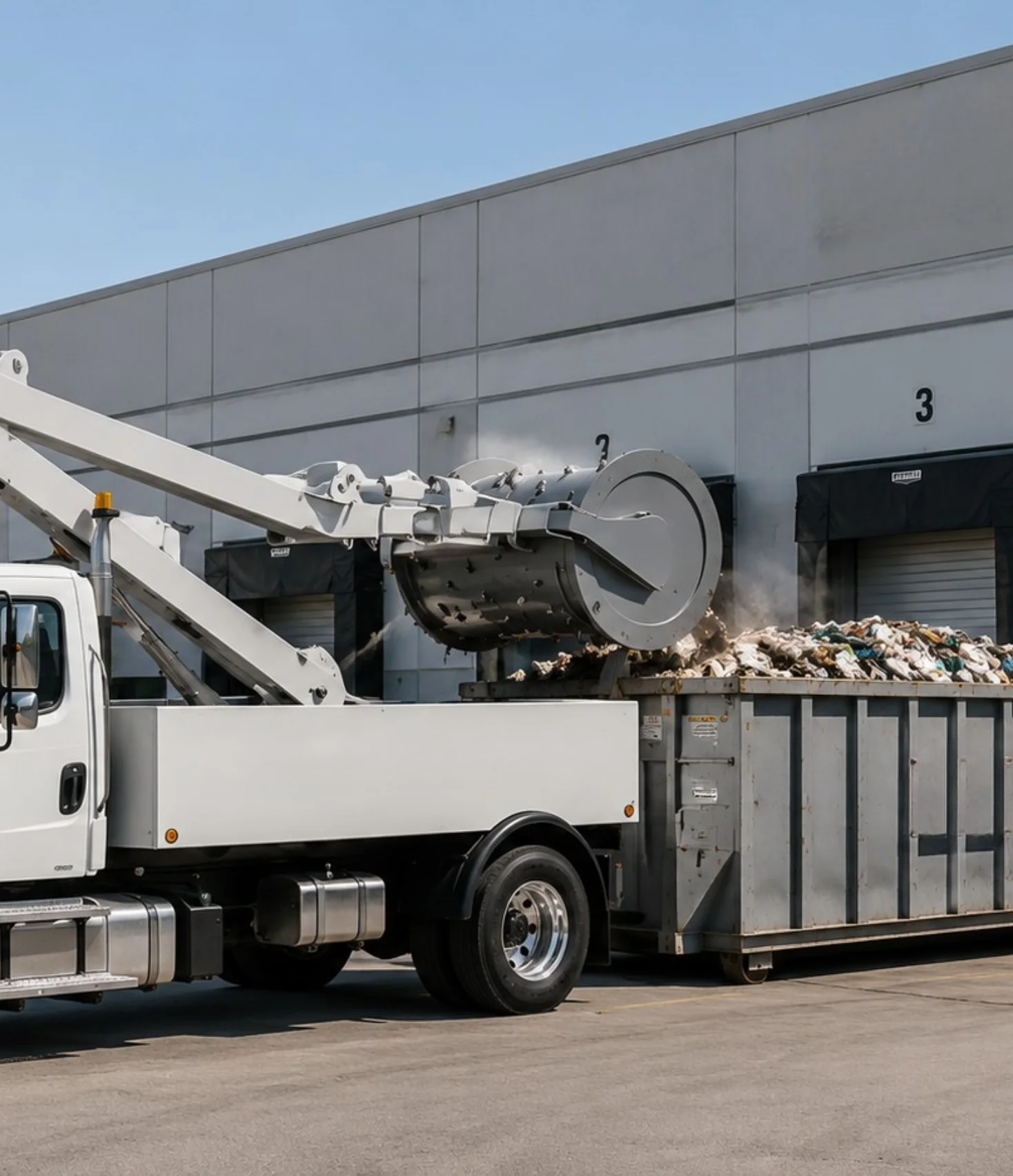
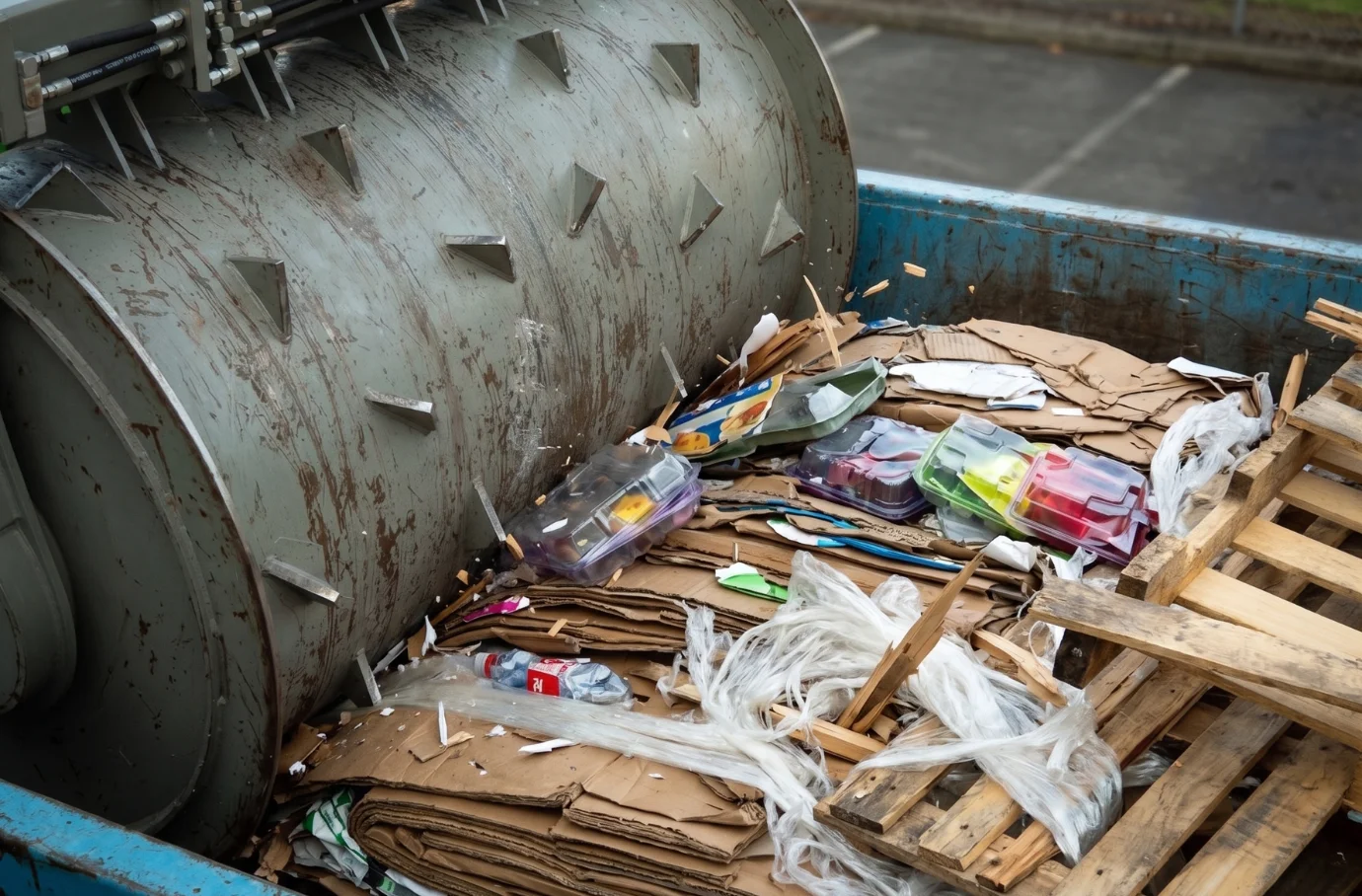
- The Compactor (Density): The compactor’s business is density. Mobile compaction services do not move the waste off-site; they simply rearrange it. By crushing the waste inside the open-top dumpster using a heavy, spiked drum, they remove the air pockets and void space. Their enemy is inefficiency.
The Suitcase Analogy: Think of it like packing for a vacation. The hauler is the airline that flies your bag to the destination. The compactor is the vacuum-seal bag that lets you fit twice as many clothes inside your luggage. The vacuum bag doesn't replace the airline; it just makes the flight more efficient. You wouldn't pay for two plane tickets if you could fit everything into one checked bag.
Why Haulers (Should) Love Compaction
A skeptic might ask: "Doesn't the hauler want to come as often as possible to charge me more?" While some legacy contracts rely on frequency-based billing, the modern logistics industry is driven by efficiency and operating ratios. Haulers face significant market pressures that compaction helps alleviate.
1. The Chronic Driver Shortage
The trucking industry is facing a demographic crisis. According to the American Trucking Associations, the industry is currently short tens of thousands of drivers, a deficit expected to grow to over 160,000 by 2030. Haulers are stretched thin, often struggling to service all their routes on time.
- The Fix: By compacting waste, you reduce the haul frequency (often by 40-60%). This means the hauler can visit your site less often but pick up a full, dense load every time. This allows them to service more customers with fewer trucks and fewer drivers, easing their operational bottleneck.
2. Safety and Stability on the Road
Loose waste in an open-top dumpster is a liability. It is prone to "fly-out" during transport, which can lead to litter fines, windshield damage for other motorists, and Department of Transportation (DOT) violations. Furthermore, unevenly loaded bins can be dangerous to lift.
- The Fix: A compacted load is effectively a solid block. It is stable, centered, and secure. Hauling a compacted dumpster is significantly safer for the driver and the public, reducing the risk of accidents and insurance claims for the hauling company.
3. The "Economics of Air" vs. Tonnage
Hauling "air" (loose trash) is fiscally inefficient. A standard open-top dumpster is often 40-60% empty space. When a hauler transports this, they burn the same amount of fuel and pay the same driver wages as they would for a full load, but they are moving very little actual tonnage.
- The Fix: While haulers charge a "haul fee" (for the truck), they also charge a "tipping fee" (at the landfill) based on weight. Haulers prefer maximizing the weight per trip because it optimizes their route density. It allows them to maximize revenue per mile without the wear and tear of multiple return trips.
4. Site Aesthetics and Access
Drivers hate overflowing dumpsters. When a dumpster is heaped high with trash, the driver often has to hand-clean the area before they can safely tarp and lift the dumpster, or they may charge an "overage fee" or "dry run fee" and leave without picking it up.
- The Fix: Mobile compaction smashes the trash down below the rim. This guarantees that when the hauler arrives, the bin is accessible, clean, and ready for immediate transport, streamlining the driver’s workflow.
The Environmental Bonus
Beyond the operational relationship, there is a massive environmental argument for pairing these services. Corporate sustainability goals (ESG) are no longer optional for many businesses. Every time a heavy-duty haul truck enters your property, it emits CO2. By using mobile compaction to increase the density of your waste, you might reduce your total hauls from 10 per month to 4. That is a 60% reduction in carbon emissions associated with your waste stream. This turns your waste management from a utility cost into a sustainability win.
The Customer's Perspective
For you, the facility manager, this partnership delivers the ultimate win.
- Retention: You keep your trusted hauler for the final disposal, ensuring you have a reliable, permitted outlet for your waste. You maintain that crucial vendor relationship.
- Optimization: Simultaneously, you bring in a compaction partner to ensure you aren't paying that hauler to transport empty space.
This isn't a replacement; it's an optimization. It transforms your waste strategy from a passive utility bill, where you pay for a truck to show up whether the bin is full or not, into an actively managed, cost-efficient operation.
Conclusion
Your hauler is an essential partner in your business operations; they are the lifeline that keeps your facility clean. Bringing in a compaction service strengthens that partnership by making the waste stream more manageable, safer, and logistically logical.
It’s not about replacing the truck that takes the trash away; it’s about making sure that truck is doing meaningful work every time it leaves your yard. In an era of rising fuel costs, labor shortages, and carbon reduction targets, efficiency is the only way forward for you, your compactor, and your hauler.
References
[1] American Trucking Associations. (2023). "Driver Shortage Update 2023." https://www.trucking.org/economics-and-research
[2] Waste360. (2022). "The Logistics of Waste: Optimizing Routes for Profitability." https://www.waste360.com/fleets-technology
[3] U.S. Department of Transportation. (2021). "Freight Management and Operations: Heavy Truck Safety." https://ops.fhwa.dot.gov/freight/
Frequently Asked Questions About Hauler Relations
Q: Will my hauler charge me more for a heavier bin?
A: It depends on your contract, but the net savings are almost guaranteed. Haulers typically charge two fees: a Haul Fee (fixed price per trip) and a Disposal/Tip Fee (price per ton). While the total disposal fee remains the same (you are throwing away the same amount of actual trash), you save massively on the Haul Fees because you reduce the number of trips by 50-70%. The result is a significantly lower total monthly cost.
Q: Do I need to renegotiate my contract?
A: It is always good practice to review your contract. If you are on a fixed "scheduled service" (e.g., 3 pickups per week regardless of volume), you will want to switch to an "on-call" status or reduce the scheduled frequency to match your new, compacted reality. Most contracts allow for frequency adjustments without penalty.
Easy steps to create a color palette
Lorem ipsum dolor sit amet, consectetur adipiscing elit lobortis arcu enim urna adipiscing praesent velit viverra sit semper lorem eu cursus vel hendrerit elementum morbi curabitur etiam nibh justo, lorem aliquet donec sed sit mi dignissim at ante massa mattis.
- Neque sodales ut etiam sit amet nisl purus non tellus orci ac auctor
- Adipiscing elit ut aliquam purus sit amet viverra suspendisse potent
- Mauris commodo quis imperdiet massa tincidunt nunc pulvinar
- Excepteur sint occaecat cupidatat non proident sunt in culpa qui officia
What is a color palette?
Vitae congue eu consequat ac felis placerat vestibulum lectus mauris ultrices cursus sit amet dictum sit amet justo donec enim diam porttitor lacus luctus accumsan tortor posuere praesent tristique magna sit amet purus gravida quis blandit turpis.
Don’t overspend on growth marketing without good retention rates
At risus viverra adipiscing at in tellus integer feugiat nisl pretium fusce id velit ut tortor sagittis orci a scelerisque purus semper eget at lectus urna duis convallis porta nibh venenatis cras sed felis eget neque laoreet suspendisse interdum consectetur libero id faucibus nisl donec pretium vulputate sapien nec sagittis aliquam nunc lobortis mattis aliquam faucibus purus in.
- Neque sodales ut etiam sit amet nisl purus non tellus orci ac auctor
- Adipiscing elit ut aliquam purus sit amet viverra suspendisse potenti
- Mauris commodo quis imperdiet massa tincidunt nunc pulvinar
- Adipiscing elit ut aliquam purus sit amet viverra suspendisse potenti
What’s the ideal customer retention rate?
Nisi quis eleifend quam adipiscing vitae aliquet bibendum enim facilisis gravida neque euismod in pellentesque massa placerat volutpat lacus laoreet non curabitur gravida odio aenean sed adipiscing diam donec adipiscing tristique risus amet est placerat in egestas erat.
“Lorem ipsum dolor sit amet consectetur adipiscing elit, sed do eiusmod tempor incididunt ut labore et dolore magna aliqua enim ad minim veniam.”
Next steps to increase your customer retention
Eget lorem dolor sed viverra ipsum nunc aliquet bibendum felis donec et odio pellentesque diam volutpat commodo sed egestas aliquam sem fringilla ut morbi tincidunt augue interdum velit euismod eu tincidunt tortor aliquam nulla facilisi aenean sed adipiscing diam donec adipiscing ut lectus arcu bibendum at varius vel pharetra nibh venenatis cras sed felis eget.

Antoine Galdès
For over 10 years, I’ve worked in marketing with a strong focus on cleantech innovation and the evolving challenges shaping the waste and compaction industry. I’m passionate about staying ahead of industry trends, continuously learning, and sharing practical insights that help businesses and municipalities improve their operations more efficiently and sustainably.
.webp)
