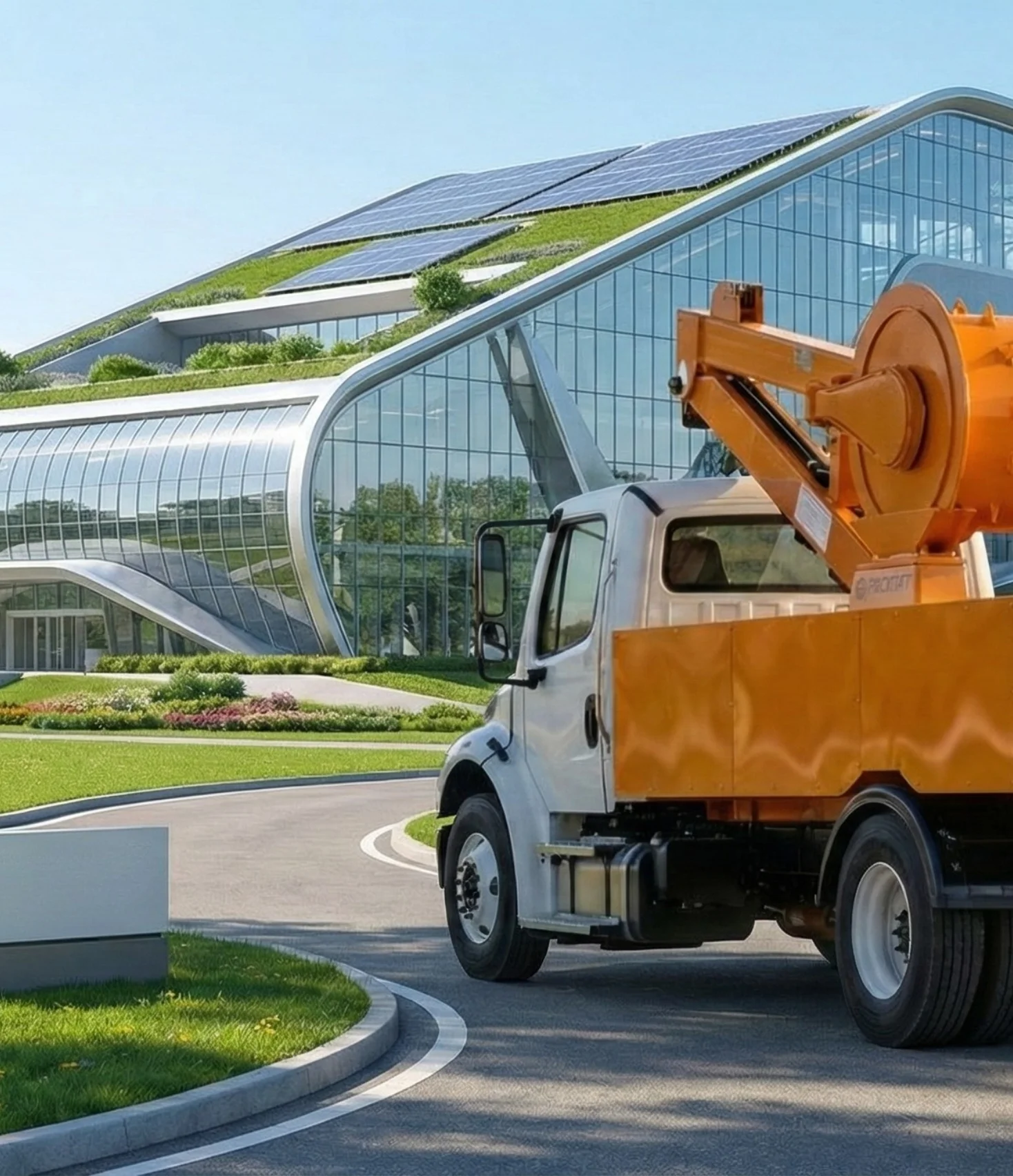
As the global conversation around climate change intensifies, the intersection of waste management and energy production has become a focal point for necessary innovation. In this rapidly evolving arena, Clean Energy Canada plays a crucial role as a catalyst for policy advancement and public awareness. By advocating for a clean energy economy, they are helping to pave the way for technologies like Waste-to-Energy (WTE) to gain a strong foothold in the national infrastructure.
For decades, Canada relied heavily on cheap land and abundant space, making landfilling the default option for municipal solid waste. However, this "take-make-waste" linear model is becoming unsustainable due to rising land costs, fierce community opposition to new landfill sites, and the urgent need to cut methane emissions. Clean Energy Canada is instrumental in shifting this narrative, positioning waste not as a burden to be buried, but as a resource to be harvested, a critical step toward a true Circular Economy.
Understanding Waste-to-Energy (WTE): More Than Just Incineration
Waste-to-Energy is the process of generating energy in the form of electricity and/or heat from the primary treatment of waste, or the processing of waste into a fuel source. It is a vital form of energy recovery that sits directly above landfilling in the recognized waste hierarchy.
For a country like Canada, with its vast geography and high per-capita energy consumption, WTE offers a dual solution:
- Waste Diversion: It diverts residual waste from landfills, preventing the generation of methane.
- Baseload Power: It creates a reliable source of power that runs 24/7, unlike intermittent renewables.
The Technology Behind the Power
Modern WTE is a far cry from the unchecked smokestack incinerators of the mid-20th century. Today's facilities employ advanced engineering to maximize efficiency and rigorously minimize environmental impact.
- Mass Burn Facilities: This is the most common technology, where waste is combusted in a controlled environment at temperatures exceeding 1,000°C. The intense heat boils water in boiler tubes to create high-pressure steam, which drives a turbine generator.
- Gasification and Pyrolysis: These emerging technologies represent the next generation of WTE. They heat waste in a low-oxygen environment. Instead of burning, the waste breaks down chemically into a synthetic gas ("syngas"). This gas can be cleaned and combusted in a turbine or refined into liquid transportation fuels, offering a bridge to low-carbon transit.
- Advanced Pollution Control: Modern plants are essentially chemical engineering facilities. They utilize scrubbers, baghouses (giant fabric filters), and activated carbon injection to strip pollutants from the flue gas. The result is a release that is often cleaner than the ambient air in major cities.
Clean Energy Canada’s Advocacy and Impact
Clean Energy Canada, a program at the Morris J. Wosk Centre for Dialogue at Simon Fraser University, works to accelerate the country's transition to clean energy. Their work supports WTE projects through a multi-pronged approach that targets both the policy level and the public mindset.
1. Policy Research & Data Modeling
Governments require hard numbers to justify infrastructure spending. Clean Energy Canada provides data-driven analysis to provincial and federal bodies to demonstrate the viability of low-carbon technologies. They model the grid impacts of integrating WTE, highlighting its value as a stable, dispatchable power source that complements variable renewables like wind and solar. When the sun doesn't shine and the wind doesn't blow, WTE facilities continue to hum, stabilizing the grid.
2. Public Engagement & Education
One of the biggest hurdles for WTE is "NIMBYism" (Not In My Backyard), often driven by outdated fears of pollution. Clean Energy Canada helps educate the public on the realities of modern emission standards. They counter myths about incineration by highlighting the rigorous environmental oversight and the benefits of district energy systems, helping communities see these facilities as assets rather than liabilities.
3. Strategic Collaboration
The organization acts as a bridge, bringing together industry leaders, environmental groups, and policymakers to align on standards. This collaboration is essential for creating the regulatory certainty investors need. Multi-million dollar WTE infrastructure projects require long timelines; investors need to know that policy won't shift under their feet, and Clean Energy Canada advocates for that stability.
The "Feedstock" Debate: Complementing, Not Replacing, Recycling
A common criticism addressed by clean energy advocates is the fear that WTE will cannibalize recycling efforts. The argument is that if we burn waste, we lose the incentive to recycle it.
However, organizations like Clean Energy Canada advocate for WTE strictly for residual waste, the material that cannot be reused or recycled economically.
The Reality: Countries with the highest rates of Waste-to-Energy (such as Sweden, Denmark, and Germany) also boast the world’s highest recycling rates. WTE and recycling work in tandem to eliminate landfills, rather than competing with one another.
The Economic and Environmental Equation
The support for WTE is deeply economic. Projects championed by clean energy advocates create high-skilled jobs in engineering, operation, and maintenance, jobs that are often local, long-term, and cannot be outsourced.
Reducing Greenhouse Gas Emissions: The Methane Factor
Landfills are a major source of methane, a gas that is over 80 times more potent than CO2 over a 20-year period. By processing non-recyclable waste in WTE facilities, we achieve a significant net reduction in emissions:
- Prevention: We prevent the formation of methane that occurs when organic matter rots in a landfill.
- Displacement: We displace electricity that might otherwise be generated by burning fossil fuels like coal or natural gas.
- Recovery: Facilities recover ferrous and non-ferrous metals from the bottom ash (the non-combustible residue) for recycling, which is far more energy-efficient than mining virgin ore.
The Frontier: Carbon Capture Utilization and Storage (CCUS)
The next phase of innovation involves integrating Carbon Capture technology directly into WTE plants. By capturing the CO2 emitted during combustion and storing it underground or utilizing it in industrial processes, WTE plants have the potential to become carbon negative, actively removing carbon from the atmosphere.
Case Studies in Success: Canada’s WTE Leaders
Several Canadian municipalities have already reaped the benefits of this approach, serving as proof points for Clean Energy Canada's advocacy.
- The Durham York Energy Centre (Ontario): This facility processes 140,000 tonnes of waste annually, generating enough electricity to power 10,000 homes. It features real-time emissions monitoring accessible to the public via a website, setting a new global standard for transparency and public trust.
- Burnaby Waste-to-Energy Facility (British Columbia): Operational for over 30 years, this plant processes a quarter of Metro Vancouver's garbage. Recent upgrades have further reduced its already low emissions. Crucially, it recovers enough heat to generate steam for a nearby paper recycling mill, closing the industrial loop and reducing the mill's reliance on natural gas.
Conclusion
The transition to a sustainable future requires a multifaceted approach. We cannot recycle our way out of the climate crisis alone, nor can we continue to pile our problems into the earth. Organizations like Clean Energy Canada are essential in ensuring that Waste-to-Energy is recognized not just as a waste management tool, but as a critical component of the clean energy puzzle.
As technology advances toward carbon capture and policies evolve to favor circular economies, the collaboration between advocacy groups and the waste industry will define the success of Canada's green revolution. By embracing these technologies, we can turn our trash into a strategic national asset, powering our homes while protecting our planet.
References
[1] Clean Energy Canada. (2023). "The State of Clean Energy in Canada: A Techno-Economic Analysis." https://cleanenergycanada.org/research/
[2] Natural Resources Canada. (2022). "Waste-to-Energy: A Guide for Municipalities and Policymakers." https://www.nrcan.gc.ca/energy/efficiency/industry/processes/systems-optimization/waste-energy/21345
[3] Columbia University, Earth Engineering Center. (2021). "The Role of WTE in the Circular Economy: Global Benchmarks." https://earth.columbia.edu/articles/view/1791
[4] Confédération of European Waste-to-Energy Plants (CEWEP). (2022). "Waste-to-Energy and Recycling: Complimentary Drivers for Circularity." https://www.cewep.eu/
Frequently Asked Questions About Waste-to-Energy
Q: Does Waste-to-Energy discourage recycling?
A: No. Data from Europe and North America consistently shows that communities with high WTE usage also have some of the highest recycling rates (often exceeding 50-60%). WTE is intended for residual waste, the material left over after recycling efforts, acting as a complement to, not a replacement for, recycling programs.
Q: Are the emissions from WTE plants harmful?
A: Modern WTE facilities are subject to some of the strictest environmental standards in the world, often stricter than coal or gas plants. Advanced scrubbing and filtration systems (like baghouses and activated carbon injection) remove the vast majority of pollutants. Study after study has shown that living near a modern WTE plant poses no significant health risk compared to general urban living.
Q: How much energy can waste actually produce?
A: One ton of municipal solid waste can generate approximately 550-700 kilowatt-hours of electricity, enough to power a typical home for nearly a month. This makes it a significant contributor to local energy grids, providing reliable "baseload" power that runs 24/7, unlike wind or solar.
Easy steps to create a color palette
Lorem ipsum dolor sit amet, consectetur adipiscing elit lobortis arcu enim urna adipiscing praesent velit viverra sit semper lorem eu cursus vel hendrerit elementum morbi curabitur etiam nibh justo, lorem aliquet donec sed sit mi dignissim at ante massa mattis.
- Neque sodales ut etiam sit amet nisl purus non tellus orci ac auctor
- Adipiscing elit ut aliquam purus sit amet viverra suspendisse potent
- Mauris commodo quis imperdiet massa tincidunt nunc pulvinar
- Excepteur sint occaecat cupidatat non proident sunt in culpa qui officia
What is a color palette?
Vitae congue eu consequat ac felis placerat vestibulum lectus mauris ultrices cursus sit amet dictum sit amet justo donec enim diam porttitor lacus luctus accumsan tortor posuere praesent tristique magna sit amet purus gravida quis blandit turpis.
Don’t overspend on growth marketing without good retention rates
At risus viverra adipiscing at in tellus integer feugiat nisl pretium fusce id velit ut tortor sagittis orci a scelerisque purus semper eget at lectus urna duis convallis porta nibh venenatis cras sed felis eget neque laoreet suspendisse interdum consectetur libero id faucibus nisl donec pretium vulputate sapien nec sagittis aliquam nunc lobortis mattis aliquam faucibus purus in.
- Neque sodales ut etiam sit amet nisl purus non tellus orci ac auctor
- Adipiscing elit ut aliquam purus sit amet viverra suspendisse potenti
- Mauris commodo quis imperdiet massa tincidunt nunc pulvinar
- Adipiscing elit ut aliquam purus sit amet viverra suspendisse potenti
What’s the ideal customer retention rate?
Nisi quis eleifend quam adipiscing vitae aliquet bibendum enim facilisis gravida neque euismod in pellentesque massa placerat volutpat lacus laoreet non curabitur gravida odio aenean sed adipiscing diam donec adipiscing tristique risus amet est placerat in egestas erat.
“Lorem ipsum dolor sit amet consectetur adipiscing elit, sed do eiusmod tempor incididunt ut labore et dolore magna aliqua enim ad minim veniam.”
Next steps to increase your customer retention
Eget lorem dolor sed viverra ipsum nunc aliquet bibendum felis donec et odio pellentesque diam volutpat commodo sed egestas aliquam sem fringilla ut morbi tincidunt augue interdum velit euismod eu tincidunt tortor aliquam nulla facilisi aenean sed adipiscing diam donec adipiscing ut lectus arcu bibendum at varius vel pharetra nibh venenatis cras sed felis eget.

Antoine Galdès
For over 10 years, I’ve worked in marketing with a strong focus on cleantech innovation and the evolving challenges shaping the waste and compaction industry. I’m passionate about staying ahead of industry trends, continuously learning, and sharing practical insights that help businesses and municipalities improve their operations more efficiently and sustainably.
.webp)
