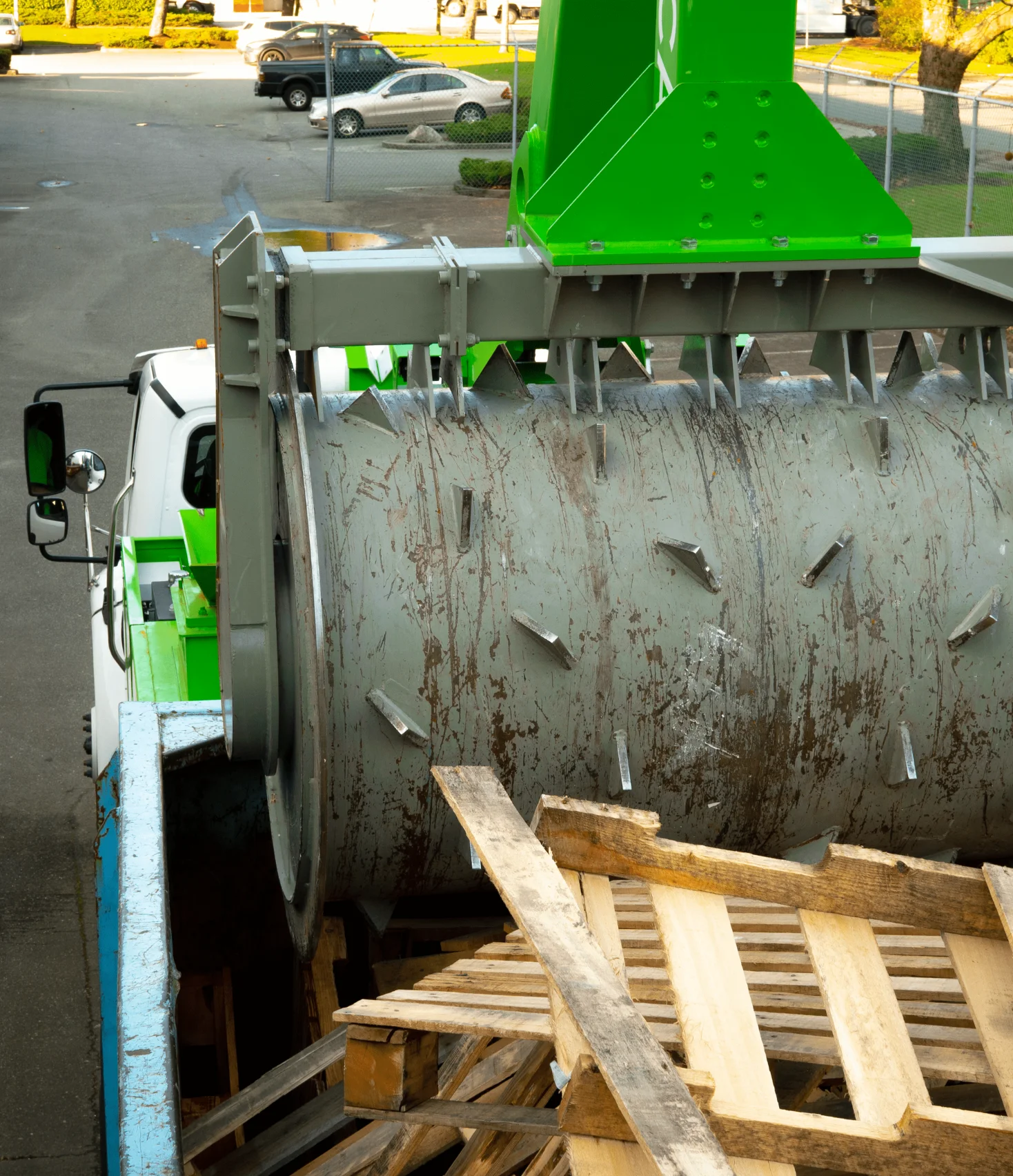
Quick Answer: Crushing wooden pallets with a heavy-duty roller compactor actively obliterates structural integrity, transforming rigid, void-heavy materials into dense, flat layers within an open-top dumpster. This aggressive volume reduction strategy slashes haul frequencies by up to 80%, instantly decreasing transport expenditures and maximizing available yard footprint. By deploying a mobile compaction unit directly at the waste source, facility managers eliminate double-handling, drastically reduce the risk of scattered debris, and optimize overall logistics throughput. The immediate ROI stems from fewer collection fees and reclaimed operational hours.
The Physics of Eliminating Structural Voids in Pallet Disposal
Wooden pallets are engineered specifically to bear massive loads while remaining lightweight, which inherently means they consist mostly of empty space. When discarded into an open-top dumpster without prior processing, these robust structures stack irregularly, creating massive air pockets that fill a container long before it reaches its actual weight capacity. You are effectively paying waste haulers exorbitant fees to transport empty air. The mechanical force required to shatter these hardwood or softwood boards must surpass their load-bearing threshold, demanding continuous, heavy, dynamic pressure rather than simple static pressing.
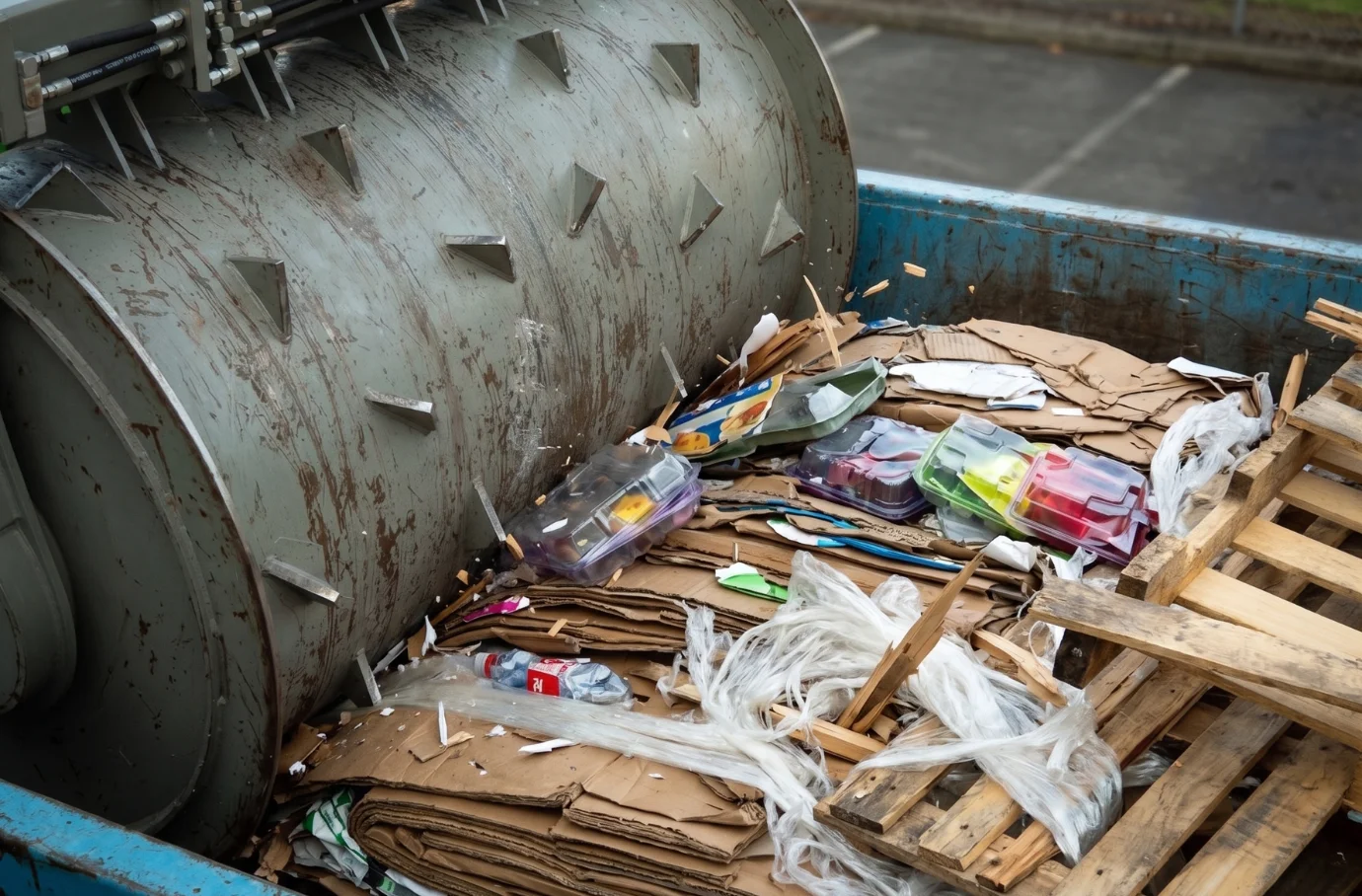
A specialized mobile roller compactor applies multi-ton downforce directly through a spiked or ribbed heavy steel drum. As the drum rolls back and forth over the pallets, the concentrated pressure points splinter the decking boards and shatter the solid stringers. This continuous grinding action breaks the fasteners' hold, collapsing the pallet's architecture completely. The wood splinters and flattens out, compressing the formerly rigid structures into a tightly knit layer of broken lumber at the bottom of the container.
In a high-volume manufacturing plant or logistics hub, yard supervisors frequently watch a 40-yard roll-off bin hit its visual capacity with only two tons of intact pallets. Once a mobile compactor processes that same bin, the load drops below the rim, creating room for three to four times more material. This transformation from a chaotic, overflowing pile into a compacted, level surface entirely redefines the facility’s waste output metrics, turning a daily logistical headache into a controlled, highly predictable process.
Financial Implications of Aggressive Volume Reduction
Every time a disposal truck enters your facility's gates to retrieve a dumpster, you incur fixed transportation costs, fuel surcharges, and potential wait-time penalties. If that truck hauls away containers filled with uncrushed pallets, your cost-per-ton of waste disposed skyrockets. For operations directors analyzing their monthly profit and loss statements, these frequent, inefficient hauls represent a massive, unchecked bleed on the operational budget. Shrinking the volume of waste before it leaves the yard is not merely a logistical upgrade; it is an aggressive cost-containment strategy.
Consider a distribution center generating 200 broken pallets weekly. Uncompacted, this volume might necessitate three distinct dumpster pickups every week, costing thousands of dollars monthly in haul fees alone. By deploying a heavy-duty roller compactor, the yard staff can reduce this requirement to a single pickup every two weeks. This direct 80% reduction in hauling frequency translates to immediate hard savings, often allowing the compaction equipment to pay for itself within the first few fiscal quarters of operation.
Beyond the direct hauling fees, there are hidden financial benefits tied to labor optimization. Forklift drivers and dock workers spend countless hours attempting to manually break down pallets, playing dangerous balancing games to fit more wood into a bin, or waiting for trucks to arrive and swap out containers. With a reliable compactor, operators spend less than five minutes flattening a load. This reallocates valuable labor hours back to core revenue-generating tasks, compounding the overall return on investment for the facility.
Operational Agility in Crowded Industrial Yards
Space is one of the most expensive commodities in any industrial setting. Loading docks and staging yards are designed for the rapid intake of raw materials and the swift outbound movement of finished goods. When dead pallets stack up in loading bays or scatter across the yard awaiting disposal, they create severe physical bottlenecks. Delivery trucks face reduced maneuvering space, increasing the likelihood of collisions, while ground personnel are forced to navigate around hazardous, nail-ridden debris.
Mobile roller compactors bring the processing power directly to the localized waste generation point. Instead of transporting pallets across the yard to a centralized, stationary crusher, a process requiring dedicated forklifts and traffic management, the compactor drives to the open-top dumpster. The operator remains safely inside the reinforced cabin, extending the articulated arm to grind the waste down in seconds. This mobility ensures that loading docks are cleared immediately, maintaining the critical flow of inbound and outbound traffic.
We see this scenario play out perfectly in automotive manufacturing plants, where parts arrive on custom, heavy-duty skids. As parts are consumed, the empty wooden skids accumulate rapidly near the assembly lines. A roaming mobile compactor services multiple bins across the expansive facility throughout the shift. By keeping these bins from overflowing, the yard remains pristine, traffic flows unimpeded, and the plant maintains maximum operational velocity without pausing for waste management bottlenecks.
Conclusion
Rethinking how your facility handles wooden pallets is a straightforward path to drastic operational improvement. You are no longer bound by the inefficient, expensive cycle of paying to transport empty space. By adopting heavy-duty roller compaction technology, you actively destroy the rigid structure of this waste, maximizing every cubic inch of your open-top dumpsters. This directly attacks your overhead costs, slicing haul frequencies and stabilizing your monthly waste management budget in an unpredictable economic landscape.
Furthermore, deploying a mobile compactor fundamentally upgrades the safety and agility of your yard operations. Reclaiming space, eliminating tripping hazards, and keeping your loading docks clear allows your logistics teams to focus entirely on production and fulfillment. Packmat’s industrial solutions deliver the brute force and reliability needed to transform pallet disposal from a constant operational drag into a highly optimized, cost-saving workflow.
Industry References & Data
- Occupational Safety and Health Administration (OSHA): Provides stringent guidelines on maintaining clear aisles and loading docks to prevent slip, trip, and fall hazards associated with scattered wooden debris.
- Environmental Protection Agency (EPA): Highlights the importance of maximizing transport efficiency to reduce greenhouse gas emissions from heavy-duty waste hauling trucks.
- Department of Transportation (DOT): Regulates the safe loading and transport weight distributions for commercial motor vehicles, emphasizing the need for evenly distributed, compacted loads.
Frequently Asked Questions
Q: How does a roller compactor handle industrial-grade hardwood pallets compared to standard softwoods?
A: Industrial-grade hardwood pallets possess significantly higher tensile strength and require massive, concentrated force to fracture. A high-performance roller compactor leverages its heavy steel drum, often equipped with aggressive spikes or crushing ribs, to focus multi-ton hydraulic pressure onto a small surface area. This targeted downforce shatters the hardwood stringers and shears the heavy-duty fasteners, completely destroying the structural integrity just as effectively as it does with softer, single-use shipping pallets. The continuous rolling action ensures even the densest woods are splintered and compacted into a flat, manageable layer.
Q: What is the direct impact of pallet compaction on yard safety protocols?
A: Uncompacted pallets create overflowing dumpsters and towering stacks on the tarmac, which act as primary sources for workplace injuries. These include puncture wounds from exposed rusty nails, sprains from navigating unstable debris, and severe accidents caused by forklift operators trying to manually compress loads with their forks, a severe OSHA violation. Using a dedicated mobile compactor eliminates these risks entirely. The operator crushes the material safely from within a reinforced, ROPS/FOPS-certified cabin, keeping the yard clean, preventing overflow, and ensuring all waste is securely contained below the rim of the bin.
Q: Can we use the same compactor for pallets and other bulky industrial waste?
A: Absolutely. The brute mechanical force required to crush wooden pallets is more than sufficient to handle a wide array of bulky industrial materials, including heavy corrugated cardboard, plastic drums, oversized crates, and manufacturing offcuts. The heavy-duty drum and robust hydraulic systems of Packmat machines are engineered for multi-material versatility. This means you do not need separate processing equipment for different waste streams; one mobile unit can traverse your facility, compacting various open-top bins and driving down disposal costs across your entire waste management operation.
Easy steps to create a color palette
Lorem ipsum dolor sit amet, consectetur adipiscing elit lobortis arcu enim urna adipiscing praesent velit viverra sit semper lorem eu cursus vel hendrerit elementum morbi curabitur etiam nibh justo, lorem aliquet donec sed sit mi dignissim at ante massa mattis.
- Neque sodales ut etiam sit amet nisl purus non tellus orci ac auctor
- Adipiscing elit ut aliquam purus sit amet viverra suspendisse potent
- Mauris commodo quis imperdiet massa tincidunt nunc pulvinar
- Excepteur sint occaecat cupidatat non proident sunt in culpa qui officia
What is a color palette?
Vitae congue eu consequat ac felis placerat vestibulum lectus mauris ultrices cursus sit amet dictum sit amet justo donec enim diam porttitor lacus luctus accumsan tortor posuere praesent tristique magna sit amet purus gravida quis blandit turpis.
Don’t overspend on growth marketing without good retention rates
At risus viverra adipiscing at in tellus integer feugiat nisl pretium fusce id velit ut tortor sagittis orci a scelerisque purus semper eget at lectus urna duis convallis porta nibh venenatis cras sed felis eget neque laoreet suspendisse interdum consectetur libero id faucibus nisl donec pretium vulputate sapien nec sagittis aliquam nunc lobortis mattis aliquam faucibus purus in.
- Neque sodales ut etiam sit amet nisl purus non tellus orci ac auctor
- Adipiscing elit ut aliquam purus sit amet viverra suspendisse potenti
- Mauris commodo quis imperdiet massa tincidunt nunc pulvinar
- Adipiscing elit ut aliquam purus sit amet viverra suspendisse potenti
What’s the ideal customer retention rate?
Nisi quis eleifend quam adipiscing vitae aliquet bibendum enim facilisis gravida neque euismod in pellentesque massa placerat volutpat lacus laoreet non curabitur gravida odio aenean sed adipiscing diam donec adipiscing tristique risus amet est placerat in egestas erat.
“Lorem ipsum dolor sit amet consectetur adipiscing elit, sed do eiusmod tempor incididunt ut labore et dolore magna aliqua enim ad minim veniam.”
Next steps to increase your customer retention
Eget lorem dolor sed viverra ipsum nunc aliquet bibendum felis donec et odio pellentesque diam volutpat commodo sed egestas aliquam sem fringilla ut morbi tincidunt augue interdum velit euismod eu tincidunt tortor aliquam nulla facilisi aenean sed adipiscing diam donec adipiscing ut lectus arcu bibendum at varius vel pharetra nibh venenatis cras sed felis eget.

Antoine Galdès
For over 10 years, I’ve worked in marketing with a strong focus on cleantech innovation and the evolving challenges shaping the waste and compaction industry. I’m passionate about staying ahead of industry trends, continuously learning, and sharing practical insights that help businesses and municipalities improve their operations more efficiently and sustainably.
.webp)
