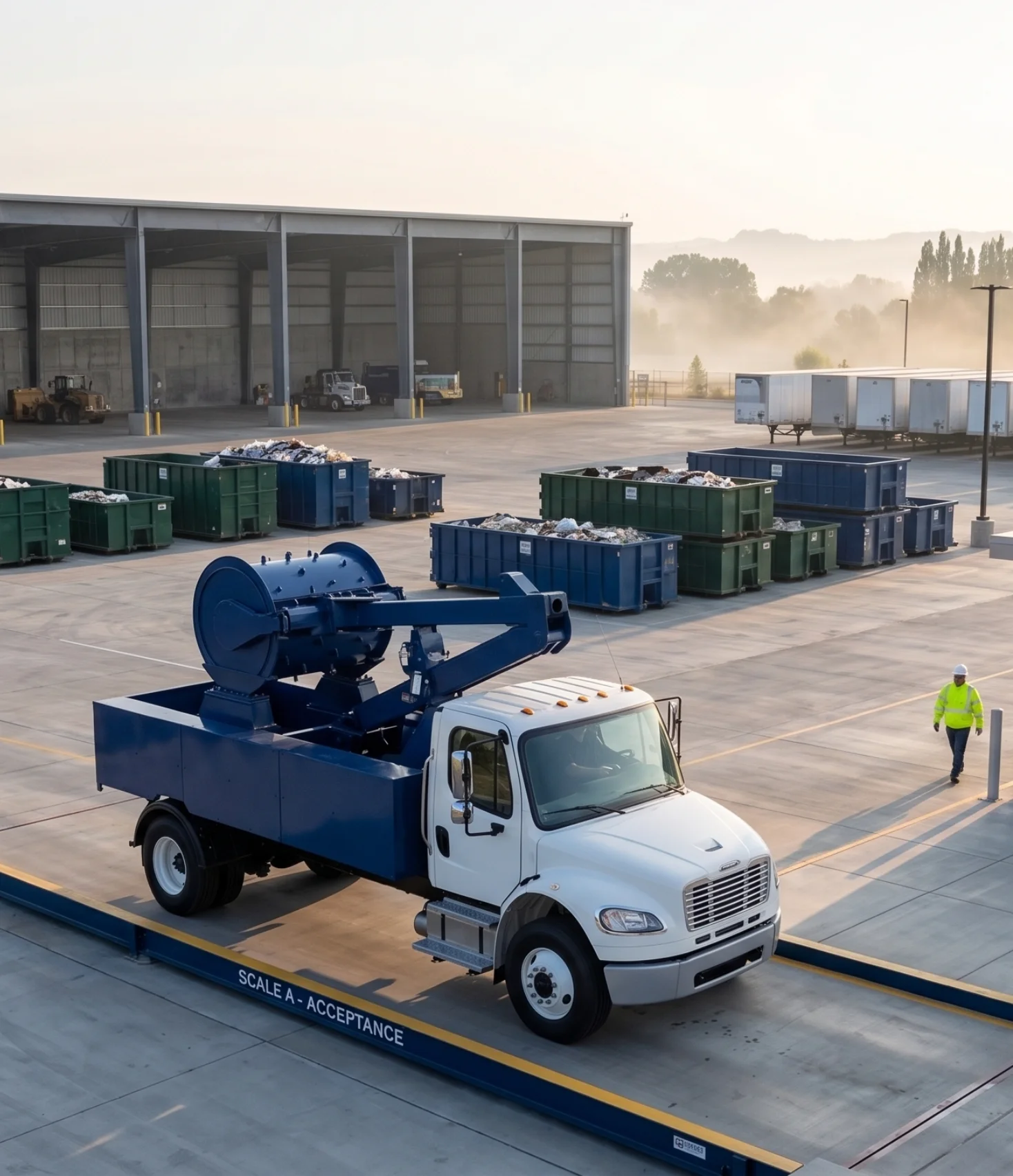
Quick answer: Uncontained lightweight waste in open-top dumpsters is a major contributor to windblown litter in industrial yards and can also create stormwater management challenges when loose debris spreads toward drainage areas. Packmat mobile compaction helps control this risk by using a heavy-duty spiked roller to crush bulky materials, pin down loose waste, and create a denser, more stable load below the rim of the dumpster. This reduces overflow, limits wind-sensitive debris, and makes outdoor waste areas easier to keep clean before weather or yard traffic turns the problem into a larger environmental issue. For facilities managing packaging waste, cardboard, plastic film, foam, or mixed industrial debris, regular mobile compaction supports cleaner yards, better housekeeping, and more proactive site control.
The Mechanics of Litter Dispersion in High-Traffic Yards
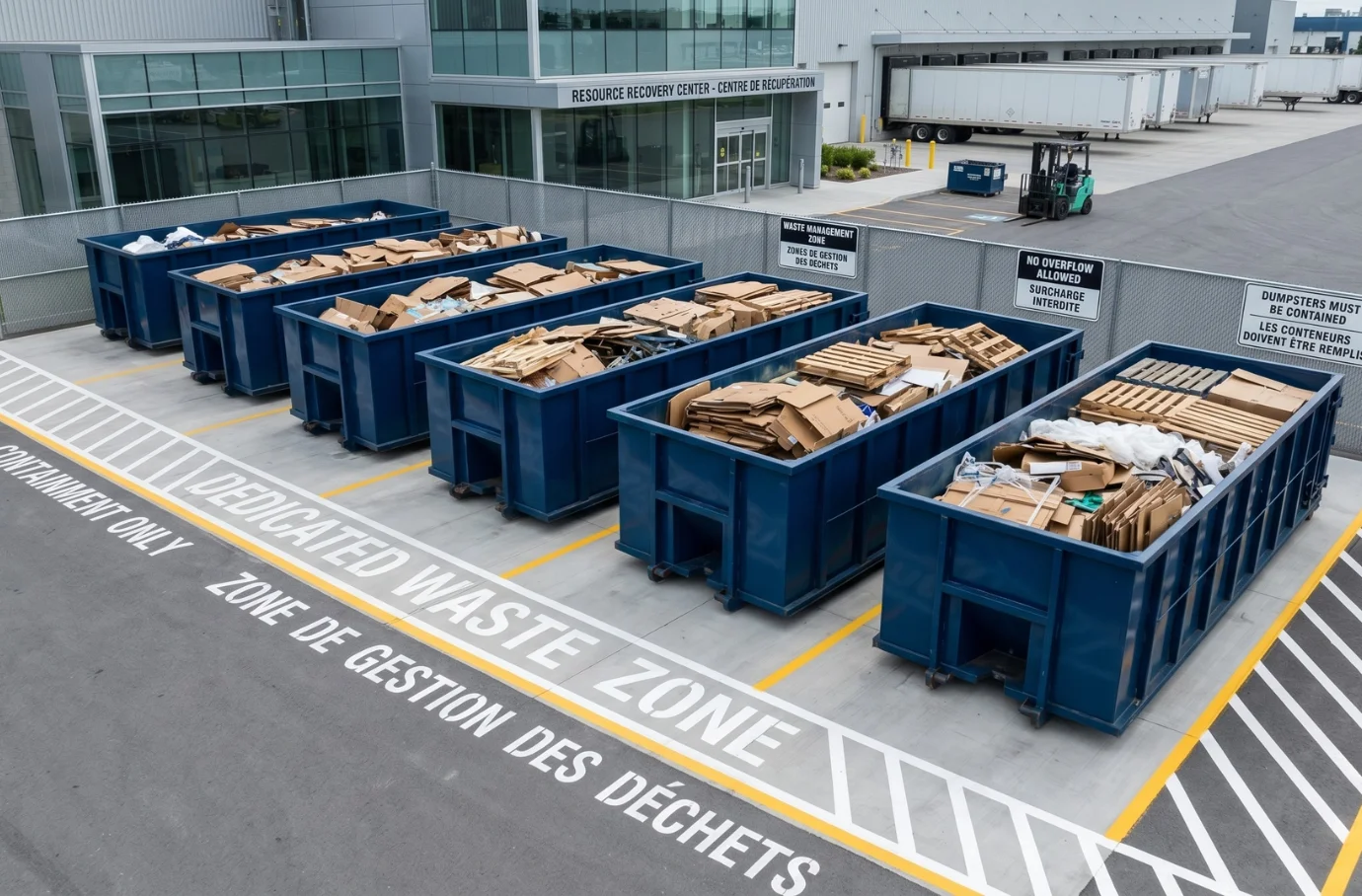
Industrial yards act as massive wind tunnels, channeling gusts between large warehouse buildings and loading docks. When open-top dumpsters are filled with lightweight packaging, such as shrink wrap, polystyrene foam, thin cardboard, and plastic banding, these dumpsters become volatile sources of debris. As waste piles near or above the rim of the bin, even a moderate breeze catches the loose surface materials. This aerodynamic lift pulls the waste out of the dumpster, scattering it across the tarmac, into perimeter fencing, and ultimately into neighboring ecosystems or public roadways.
The sheer volume of movement in a busy logistics center exacerbates this issue. Constant heavy truck traffic creates violent drafts and localized air turbulence, effectively vacuuming lightweight trash from overflowing bins. Yard sweepers and manual labor are constantly deployed to retrieve this fugitive waste, an endless cycle that drains operational resources and labor hours. The fundamental issue is a lack of material containment. Without a physical mechanism to bind and weigh down the lighter materials, the waste remains in a state of high mobility, ready to become environmental pollution at any moment.
Heavy-duty roller compaction solves this issue by physically crushing and pinning loose waste inside the open-top dumpster. Instead of pressing waste from the sides or compressing it inside a closed chamber, Packmat’s spiked steel roller travels directly over the debris, breaking down bulky materials, pushing air pockets out, and forcing loose items into a denser, more interlocked layer. Cardboard is crushed and folded down, plastics are pierced and trapped, and heavier debris is pressed over lighter, wind-sensitive materials. The result is not just a fuller dumpster, but a more stable waste load sitting well below the rim of the dumpster. With less loose material exposed to wind, facilities can reduce the risk of lightweight waste being lifted out of the bin and scattered across the yard.
Mitigating Stormwater Pollution and Regulatory Exposure
Windblown litter is not only a housekeeping issue. Once loose waste escapes from an open-top dumpster, rainfall can carry small debris, residue, and displaced materials across the yard and toward nearby drainage areas. In high-traffic industrial sites, this creates an added environmental concern: the more waste spreads around the facility, the harder it becomes to keep stormwater pathways clean and controlled.
Most outdoor dumpsters are not covered on a daily basis. In many facilities, open-top bins remain exposed to rain, wind, vehicle movement, and daily operational activity. This makes source control especially important. If bulky, lightweight waste is allowed to pile above the rim of the dumpster, it becomes much more vulnerable to both wind displacement and rainwater contact.
Packmat’s mobile roller compaction helps reduce this exposure by keeping waste lower, denser, and more stable inside the bin. As the spiked steel roller crushes bulky material and presses loose items into an interlocked layer, the waste is less likely to overflow or sit exposed above the dumpster rim. This does not make an open-top dumpster waterproof, and it does not replace a proper stormwater management plan. However, it can reduce one of the most common contributors to messy runoff: loose, overflowing material that should have remained contained in the first place.
For facilities managing packaging waste, cardboard, plastic film, strapping, foam, or mixed industrial debris, regular compaction can make the waste area easier to control before bad weather hits. In situations where covers or tarps are required or practical, keeping the load below the rim can also make those measures easier to apply. The main benefit, however, is more direct: mobile compaction helps reduce preventable overflow and loose debris around outdoor waste areas.
Executing a More Proactive Environmental Operations Strategy
Building a more sustainable industrial operation requires looking beyond broad corporate goals and addressing the practical realities of the yard. For distribution centers, manufacturing sites, and logistics facilities, waste areas are often one of the most visible places where environmental control can break down. When open-top dumpsters overflow with loose cardboard, plastic film, strapping, foam, or mixed debris, those materials can quickly become windblown litter or contribute to messy conditions around the site.
This is why mobile compaction works best as a proactive operating routine, not just a reaction to an overflowing dumpster. Instead of waiting for a hauler to swap a bin only after it has become too full, facility teams can compact waste regularly to preserve dumpster capacity and keep bulky materials under control. Within minutes, the spiked roller crushes loose waste into a denser, more stable layer, creating additional room inside the dumpster and reducing the amount of exposed material vulnerable to wind or weather.
This approach helps facilities maintain cleaner, more controlled waste areas on a day-to-day basis. It does not replace inspections, housekeeping protocols, stormwater planning, or proper dumpster management, but it makes those practices easier to uphold. When the dumpster has usable capacity and waste is kept contained, teams are less likely to deal with recurring overflow, scattered debris, or last-minute cleanup before audits, site visits, or service pickups.
A cleaner yard can also support a stronger culture of safety and operational discipline. When employees have enough dumpster space and a clear process for managing bulky waste, there is less temptation to leave material around the bin or let overflow become normal. Mobile compaction gives facility managers a practical tool to reduce preventable mess, improve site control, and support a more responsible waste management strategy without relying only on cleanup after the fact.
Conclusion
Preventing windblown litter and reducing stormwater exposure starts with better control of the waste inside the dumpster. In busy industrial yards, open-top dumpsters filled with lightweight packaging, cardboard, plastic film, foam, or mixed debris can quickly become difficult to manage when waste rises above the rim or remains loose and exposed.
Packmat mobile compaction gives facilities a practical way to address this problem at the source. By using a heavy-duty spiked roller to crush, pin down, and interlock loose materials directly inside the dumpster, the waste load becomes lower, denser, and more stable. This helps reduce overflow, limit wind-sensitive debris, and make outdoor waste areas easier to maintain.
Mobile compaction does not replace proper housekeeping, stormwater planning, inspections, or responsible dumpster management. However, it gives facility teams a powerful tool to support those practices in real-world conditions. Instead of relying only on cleanup after waste has already spread, facilities can take a more proactive approach by keeping materials contained before wind, rain, or daily yard traffic turn them into a larger operational issue.
For industrial sites looking to maintain cleaner yards, reduce preventable debris, and improve control over open-top dumpsters, Packmat provides a straightforward solution: crush the waste where it sits, keep it below the rim, and make the entire waste area easier to manage.
Industry References & Data
- Environmental Protection Agency (EPA): Enforces the National Pollutant Discharge Elimination System (NPDES), mandating strict control measures for stormwater discharges from industrial activities.
- Occupational Safety and Health Administration (OSHA): Outlines the safety hazards of unmanaged yard debris, which can obscure clear pathways and cause severe workplace accidents.
- Department of Transportation (DOT): Mandates secure containment of all materials during transport to prevent highway littering and hazards to other drivers.
Frequently Asked Questions
Q: How does crushing waste help reduce the risk of debris entering the stormwater system?
A: Mobile roller compaction helps by reducing overflow and keeping loose materials better contained inside the open-top dumpster. When lightweight plastics, cardboard, film, foam, or strapping sit above the rim or scatter around the yard, rain can carry small debris and residue toward storm drains. By crushing these materials into a denser, more stable layer below the rim, Packmat helps limit loose, exposed waste around drainage areas. It does not replace proper stormwater management, but it supports cleaner yards and better source control.
Q: Can a roller compactor crush lightweight materials without them flying out during the process?
A: Yes. Packmat’s spiked steel roller is designed to move directly over loose waste and apply steady downward pressure inside the dumpster. The roller crushes bulky items, presses lightweight materials into the load, and helps trap plastics, cardboard, and packaging waste beneath heavier debris. With controlled passes from a trained operator, the compaction process helps stabilize loose materials rather than scatter them around the yard.
Q: Why is mobile compaction useful compared to stationary balers for outdoor waste control?
A: Stationary balers can be useful for specific sorted materials, but they usually require waste to be collected, moved, and handled before being processed. For outdoor open-top dumpsters, mobile compaction addresses the waste where it already sits. Packmat drives directly to the container and crushes the material inside the bin, reducing overflow and loose debris without requiring extra handling or transport across the yard. This makes it especially practical for facilities managing mixed, bulky, or lightweight waste in exterior containers.
Easy steps to create a color palette
Lorem ipsum dolor sit amet, consectetur adipiscing elit lobortis arcu enim urna adipiscing praesent velit viverra sit semper lorem eu cursus vel hendrerit elementum morbi curabitur etiam nibh justo, lorem aliquet donec sed sit mi dignissim at ante massa mattis.
- Neque sodales ut etiam sit amet nisl purus non tellus orci ac auctor
- Adipiscing elit ut aliquam purus sit amet viverra suspendisse potent
- Mauris commodo quis imperdiet massa tincidunt nunc pulvinar
- Excepteur sint occaecat cupidatat non proident sunt in culpa qui officia
What is a color palette?
Vitae congue eu consequat ac felis placerat vestibulum lectus mauris ultrices cursus sit amet dictum sit amet justo donec enim diam porttitor lacus luctus accumsan tortor posuere praesent tristique magna sit amet purus gravida quis blandit turpis.
Don’t overspend on growth marketing without good retention rates
At risus viverra adipiscing at in tellus integer feugiat nisl pretium fusce id velit ut tortor sagittis orci a scelerisque purus semper eget at lectus urna duis convallis porta nibh venenatis cras sed felis eget neque laoreet suspendisse interdum consectetur libero id faucibus nisl donec pretium vulputate sapien nec sagittis aliquam nunc lobortis mattis aliquam faucibus purus in.
- Neque sodales ut etiam sit amet nisl purus non tellus orci ac auctor
- Adipiscing elit ut aliquam purus sit amet viverra suspendisse potenti
- Mauris commodo quis imperdiet massa tincidunt nunc pulvinar
- Adipiscing elit ut aliquam purus sit amet viverra suspendisse potenti
What’s the ideal customer retention rate?
Nisi quis eleifend quam adipiscing vitae aliquet bibendum enim facilisis gravida neque euismod in pellentesque massa placerat volutpat lacus laoreet non curabitur gravida odio aenean sed adipiscing diam donec adipiscing tristique risus amet est placerat in egestas erat.
“Lorem ipsum dolor sit amet consectetur adipiscing elit, sed do eiusmod tempor incididunt ut labore et dolore magna aliqua enim ad minim veniam.”
Next steps to increase your customer retention
Eget lorem dolor sed viverra ipsum nunc aliquet bibendum felis donec et odio pellentesque diam volutpat commodo sed egestas aliquam sem fringilla ut morbi tincidunt augue interdum velit euismod eu tincidunt tortor aliquam nulla facilisi aenean sed adipiscing diam donec adipiscing ut lectus arcu bibendum at varius vel pharetra nibh venenatis cras sed felis eget.

Antoine Galdès
For over 10 years, I’ve worked in marketing with a strong focus on cleantech innovation and the evolving challenges shaping the waste and compaction industry. I’m passionate about staying ahead of industry trends, continuously learning, and sharing practical insights that help businesses and municipalities improve their operations more efficiently and sustainably.
.webp)
