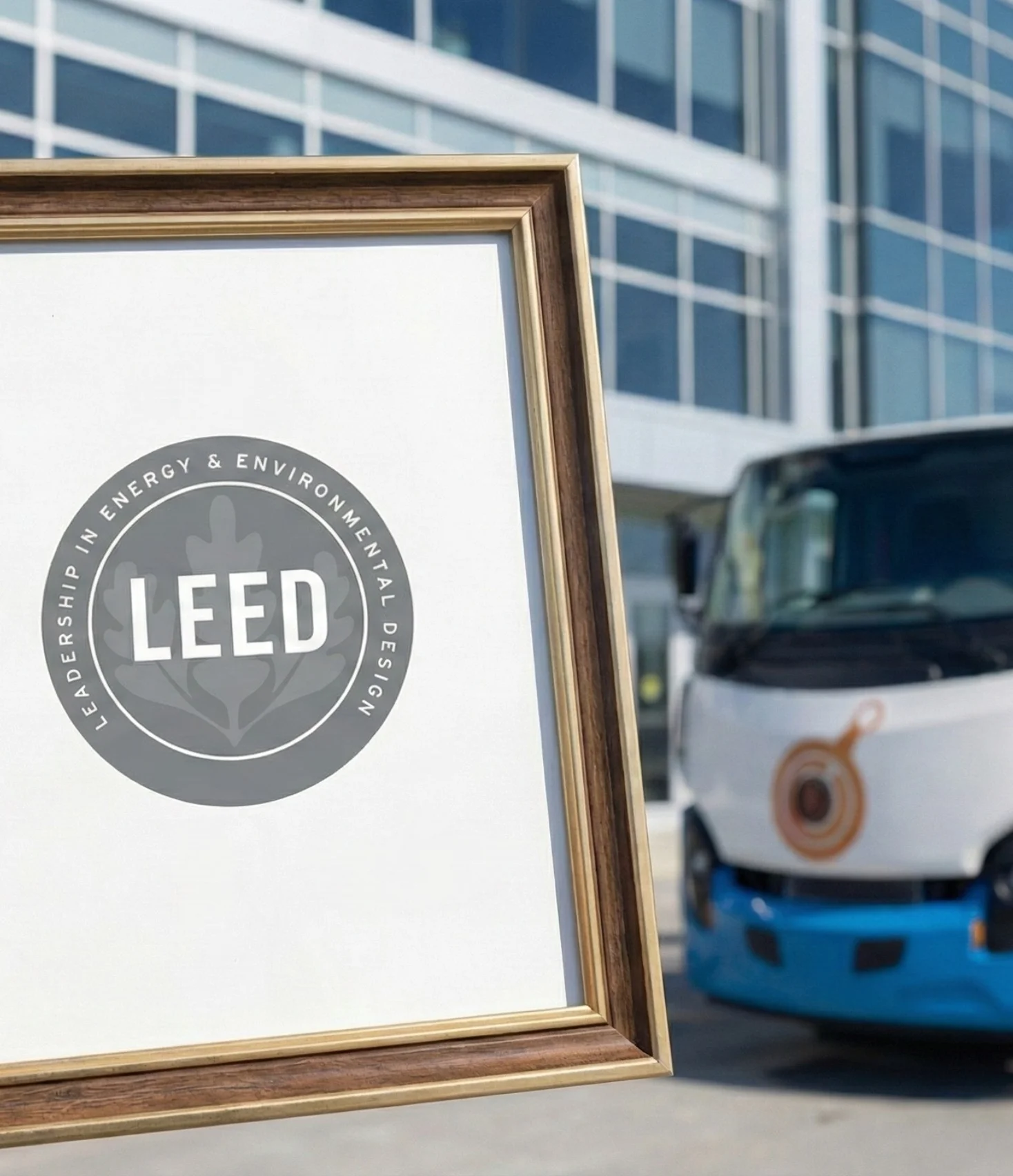
In the world of commercial real estate, green building certifications like LEED (Leadership in Energy and Environmental Design) and BOMA BEST (Building Owners and Managers Association Building Environmental Standards) have become essential symbols of sustainability and corporate responsibility. These certifications not only demonstrate a commitment to environmental stewardship but also offer a range of financial and operational advantages, from reduced utility costs and lower operating expenses to enhanced tenant appeal and retention rates. A key component of these certification programs is waste management, and innovative solutions like mobile compaction can play a crucial role in helping buildings meet their waste reduction targets and earn valuable certification credits.
The Critical Role of Waste Management in Green Certifications
Both LEED and BOMA BEST place a strong, measurable emphasis on waste reduction and diversion. The objective is to minimize the quantity of waste sent to landfills and incinerators, and instead promote recycling, composting, and other sustainable waste management practices. This goal is central to resource efficiency and reducing the building's overall environmental footprint.
The U.S. Green Building Council (USGBC), which administers the LEED program, has established a set of credits specifically focused on Construction and Demolition (C&D) Waste Management and Ongoing Consumables and Durable Goods Purchasing/Waste Management. These credits reward buildings that divert a significant portion of their waste from landfills, with higher diversion rates earning more points toward certification levels (Certified, Silver, Gold, or Platinum). For the LEED Operations and Maintenance (O+M) rating system, documented waste diversion rates are a continuous performance metric. The key metric is often the percentage of waste by weight or volume that is diverted from disposal [1].
Similarly, the BOMA BEST Sustainable program includes a comprehensive framework of best practices for waste reduction and diversion. The program encourages buildings to conduct regular waste audits to understand their waste stream composition, implement robust recycling and composting programs, and continuously track their waste diversion rates. Buildings that demonstrate a commitment to continuous improvement in their waste management practices can achieve higher recognition and certification levels, signaling superior environmental performance to the market [2]. The ability to precisely track and manage waste volume is non-negotiable for success in both programs.
How Mobile Compaction Services Support LEED and BOMA BEST
Mobile compaction services are a powerful, strategic tool for building owners and property managers seeking to achieve or maintain LEED or BOMA BEST certification. By densifying waste at the source, these services help buildings optimize their entire waste handling process and directly contribute to required credit metrics:
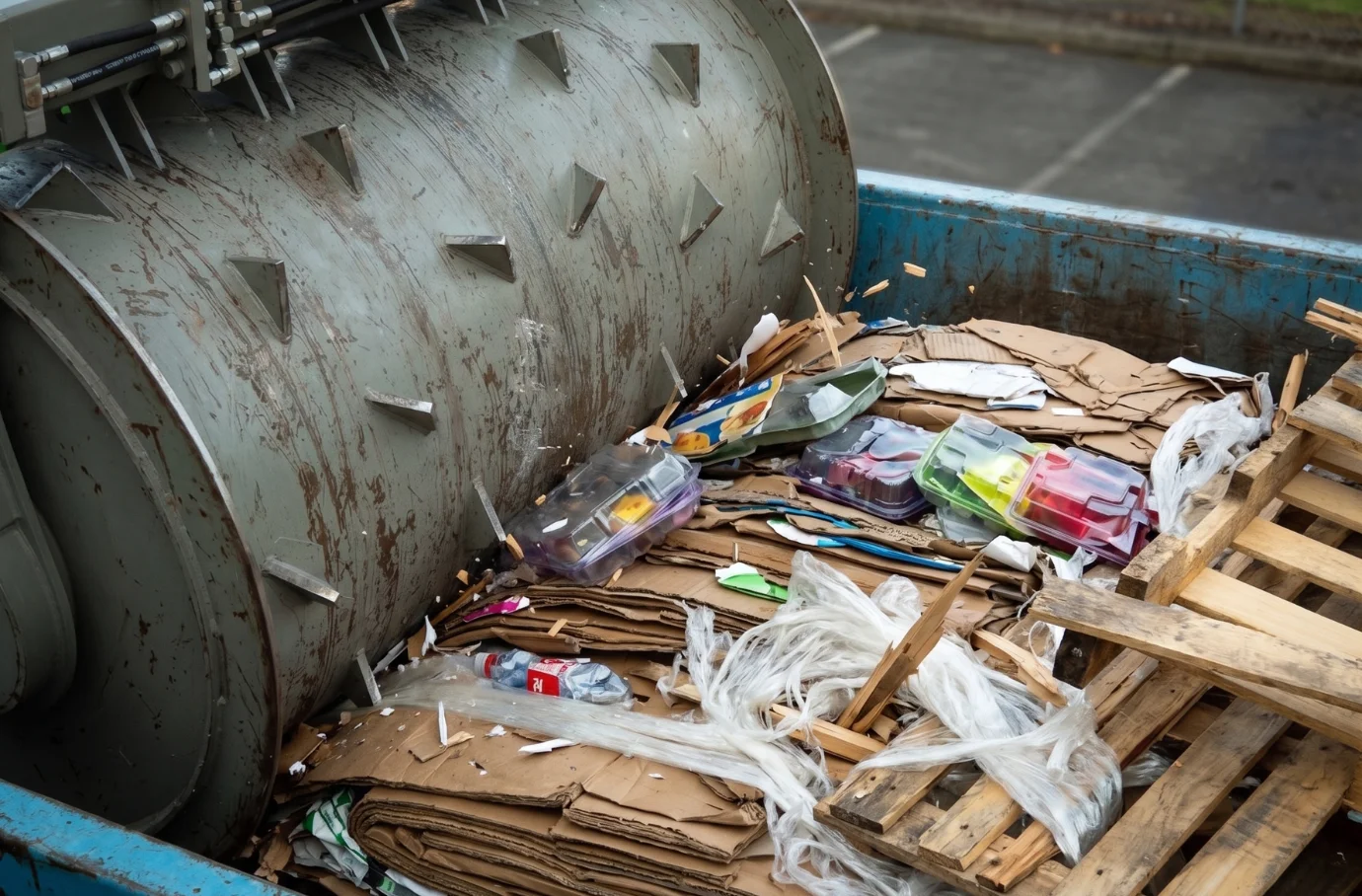
- Directly Increase Waste Diversion Rates: Compaction can significantly reduce the volume of non-recyclable waste by condensing air and bulk. This frees up crucial space and simplifies the logistics for separating and managing recyclable materials (paper, plastics, metal, cardboard). Since the non-recyclable stream is managed more efficiently, resources can be dedicated to maximizing the recovery of marketable recyclables, leading to a measurably higher overall waste diversion rate, a core metric for both certification systems.
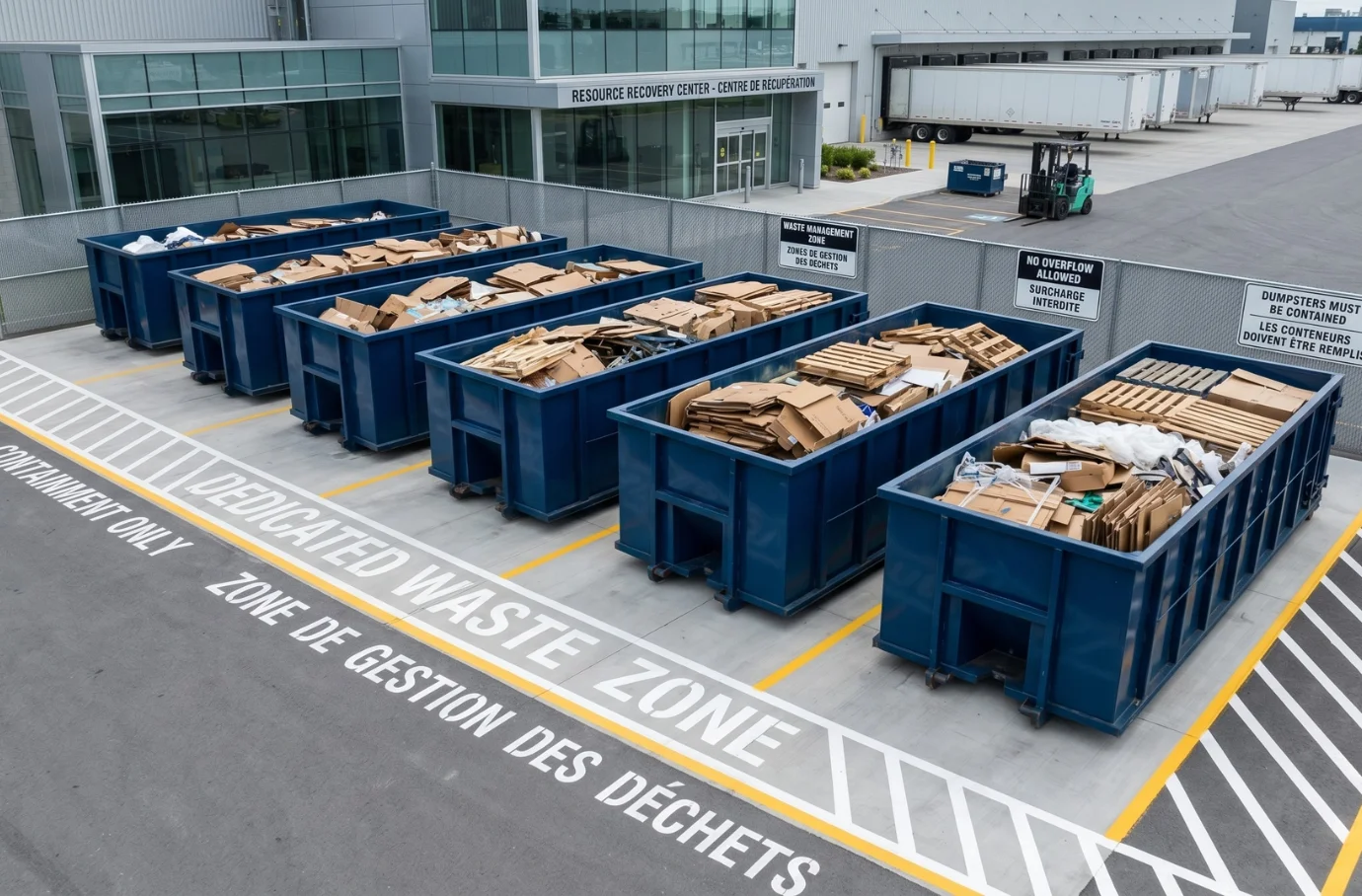
- Optimize Recycling and Composting Programs: By compacting non-recyclable (residual) waste, buildings can free up valuable space in their loading docks, waste areas, and storage yards. This allows for the allocation of more space to recycling and composting bins, facilitating more comprehensive and high-performing programs. This might include adding dedicated bins for new material streams (e.g., expanded plastic types or food scraps) that were previously logistically impossible due to space constraints.
- Reduce Collection Frequency and Carbon Footprint (LEED Location & Transportation Credit): Compaction can reduce the number of waste collection trips by up to 70%, resulting in significant cost savings and, crucially, a smaller transportation-related carbon footprint. Reducing truck traffic and associated emissions is a key consideration for both LEED and BOMA BEST, which encourage buildings to reduce their environmental impacts linked to vehicle use and transportation. This relates directly to credits focused on operational energy and greenhouse gas reduction.
- Improve Data Tracking, Auditing, and Reporting: Modern mobile compaction services often integrate with IoT technology, providing detailed, verifiable data on residual waste volumes and collection frequency (e.g., weight, time stamps, and compaction ratios). This quantitative data is essential for tracking progress toward waste reduction goals and for generating the rigorous, auditable reports required by both LEED and BOMA BEST documentation. Without such verifiable data, earning certification points becomes extremely difficult.
The Financial and Operational Case for Compaction
Beyond the certification points, the adoption of mobile compaction offers tangible financial and operational benefits that align with the goals of sustainable property ownership:
- Lower Operational Expenses (OPEX): The core value proposition, reducing the number of hauls, directly lowers monthly expenses by minimizing hauling fees and landfill tipping fees. This financial saving contributes to the strong return on investment (ROI) required to justify green investments.
- Enhanced Tenant Satisfaction and Lease Value: Optimized waste areas eliminate unsightly overflow, reduce odors, and improve overall property aesthetics. A cleaner, safer, and visibly sustainable building enhances tenant satisfaction, which is strongly correlated with higher tenant retention rates and the ability to command premium lease rates, goals integral to the BOMA BEST philosophy.
- Safety and Site Cleanliness: Consolidating waste prevents clutter in the loading dock or service areas, reducing potential safety hazards (trips, spills) and improving compliance with fire and safety codes.
Case Study Application: Achieving Certification Tiers
Consider a large commercial tower pursuing LEED O+M Gold certification. The building has implemented a comprehensive recycling program but struggles to meet the required 60% waste diversion target for its desired certification level. The waste audit reveals high volumes of bulky, low-density plastic packaging and unflattened cardboard entering the residual waste stream, preventing the 60% goal.
By partnering with a mobile compaction service, the building achieves a significant reduction in the volume of its non-recyclable waste. This allows the property manager to re-designate space for a dedicated baler for film plastic and expand their composting program for office food scraps. As a direct consequence, the building's overall waste diversion rate increases by 20 percentage points (e.g., from 45% to 65%), allowing them to secure the necessary LEED credits (e.g., the C&D Waste Management credit in New Construction, or the Ongoing Waste Performance credits in O+M) and ultimately achieve Gold certification. A study by the National Waste & Recycling Association demonstrated that optimized waste management systems can improve diversion rates by up to 30% in commercial buildings, validating the measurable impact of such solutions [3].
Conclusion: Building a Sustainable Future
For building owners and managers committed to sustainability, green building certifications like LEED and BOMA BEST are invaluable tools for demonstrating environmental commitment and achieving corporate objectives. By integrating mobile compaction into their waste management strategies, buildings can gain a verifiable, measurable advantage. This solution not only drastically improves environmental performance, by reducing landfill volume and transportation-related emissions, but also yields significant cost savings and operational efficiencies. As market demand for certifiably sustainable buildings continues to grow, innovative solutions like mobile compaction will play an increasingly important and indispensable role in helping the commercial real estate industry build a greener, more resilient, and more profitable future.
References
[1] U.S. Green Building Council. (n.d.). Solid waste management. Retrieved from https://www.usgbc.org/credits/mr21
[2] BOMA BEST. (n.d.). BOMA BEST Sustainable - Building Certification Program. Retrieved from https://bomabest.org/boma-best-sustainable/
[3] National Waste & Recycling Association. (n.d.). Waste and Recycling. Retrieved from https://www.wasterecycling.org/
Easy steps to create a color palette
Lorem ipsum dolor sit amet, consectetur adipiscing elit lobortis arcu enim urna adipiscing praesent velit viverra sit semper lorem eu cursus vel hendrerit elementum morbi curabitur etiam nibh justo, lorem aliquet donec sed sit mi dignissim at ante massa mattis.
- Neque sodales ut etiam sit amet nisl purus non tellus orci ac auctor
- Adipiscing elit ut aliquam purus sit amet viverra suspendisse potent
- Mauris commodo quis imperdiet massa tincidunt nunc pulvinar
- Excepteur sint occaecat cupidatat non proident sunt in culpa qui officia
What is a color palette?
Vitae congue eu consequat ac felis placerat vestibulum lectus mauris ultrices cursus sit amet dictum sit amet justo donec enim diam porttitor lacus luctus accumsan tortor posuere praesent tristique magna sit amet purus gravida quis blandit turpis.
Don’t overspend on growth marketing without good retention rates
At risus viverra adipiscing at in tellus integer feugiat nisl pretium fusce id velit ut tortor sagittis orci a scelerisque purus semper eget at lectus urna duis convallis porta nibh venenatis cras sed felis eget neque laoreet suspendisse interdum consectetur libero id faucibus nisl donec pretium vulputate sapien nec sagittis aliquam nunc lobortis mattis aliquam faucibus purus in.
- Neque sodales ut etiam sit amet nisl purus non tellus orci ac auctor
- Adipiscing elit ut aliquam purus sit amet viverra suspendisse potenti
- Mauris commodo quis imperdiet massa tincidunt nunc pulvinar
- Adipiscing elit ut aliquam purus sit amet viverra suspendisse potenti
What’s the ideal customer retention rate?
Nisi quis eleifend quam adipiscing vitae aliquet bibendum enim facilisis gravida neque euismod in pellentesque massa placerat volutpat lacus laoreet non curabitur gravida odio aenean sed adipiscing diam donec adipiscing tristique risus amet est placerat in egestas erat.
“Lorem ipsum dolor sit amet consectetur adipiscing elit, sed do eiusmod tempor incididunt ut labore et dolore magna aliqua enim ad minim veniam.”
Next steps to increase your customer retention
Eget lorem dolor sed viverra ipsum nunc aliquet bibendum felis donec et odio pellentesque diam volutpat commodo sed egestas aliquam sem fringilla ut morbi tincidunt augue interdum velit euismod eu tincidunt tortor aliquam nulla facilisi aenean sed adipiscing diam donec adipiscing ut lectus arcu bibendum at varius vel pharetra nibh venenatis cras sed felis eget.

Antoine Galdès
For over 10 years, I’ve worked in marketing with a strong focus on cleantech innovation and the evolving challenges shaping the waste and compaction industry. I’m passionate about staying ahead of industry trends, continuously learning, and sharing practical insights that help businesses and municipalities improve their operations more efficiently and sustainably.
.webp)
